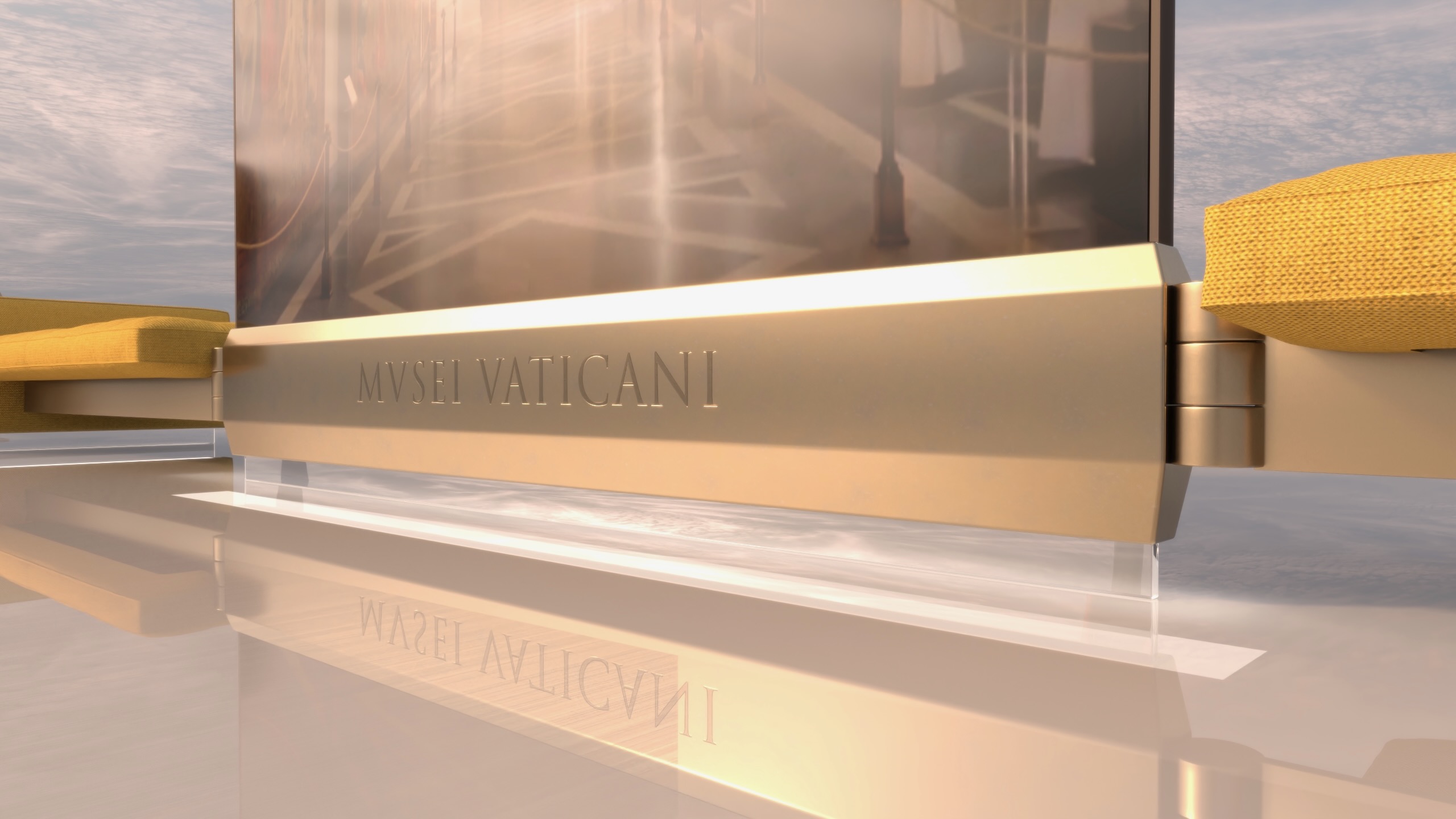
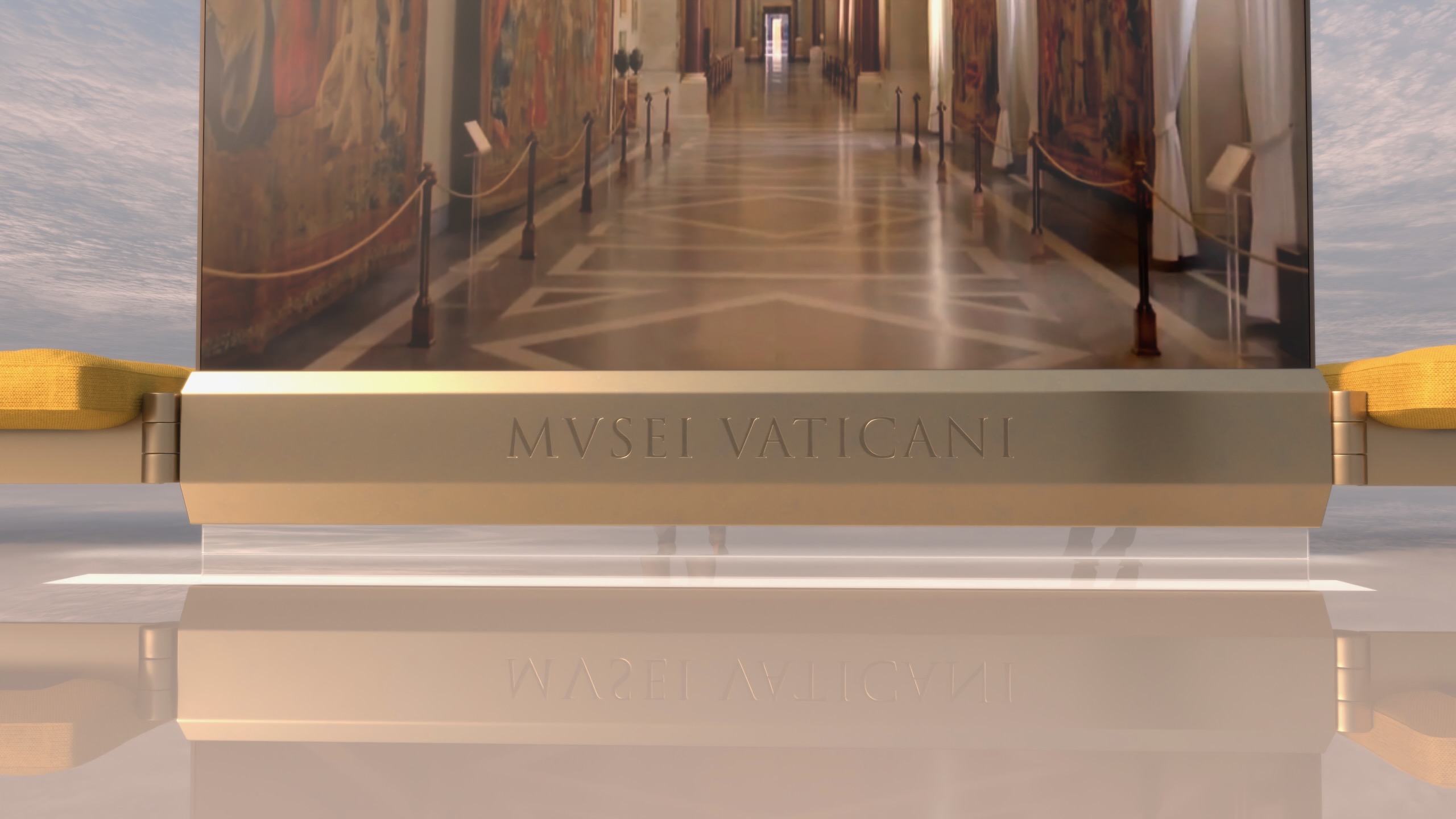
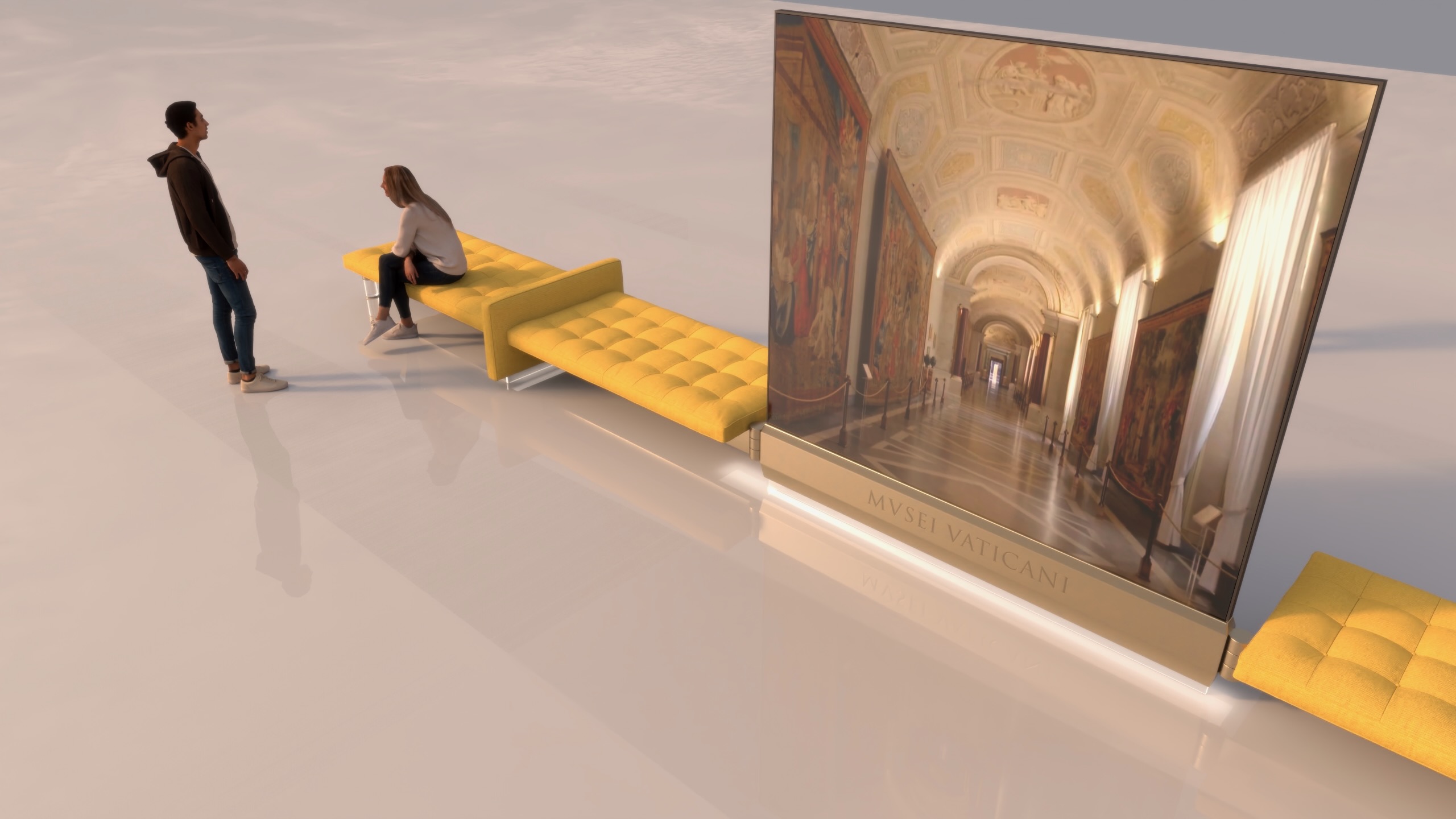
SOULMATE is a furnishing system designed for the Vatican Museums that introduces a new balance between information and pause. Rather than separating moments of learning from moments of rest, it brings them together into a single, continuous system that accompanies visitors throughout their experience.
Time inside the museum is not uniform: it unfolds through phases of focus, movement, waiting, and rest. SOULMATE is conceived to embrace this variability, offering a support that naturally responds to these different conditions.
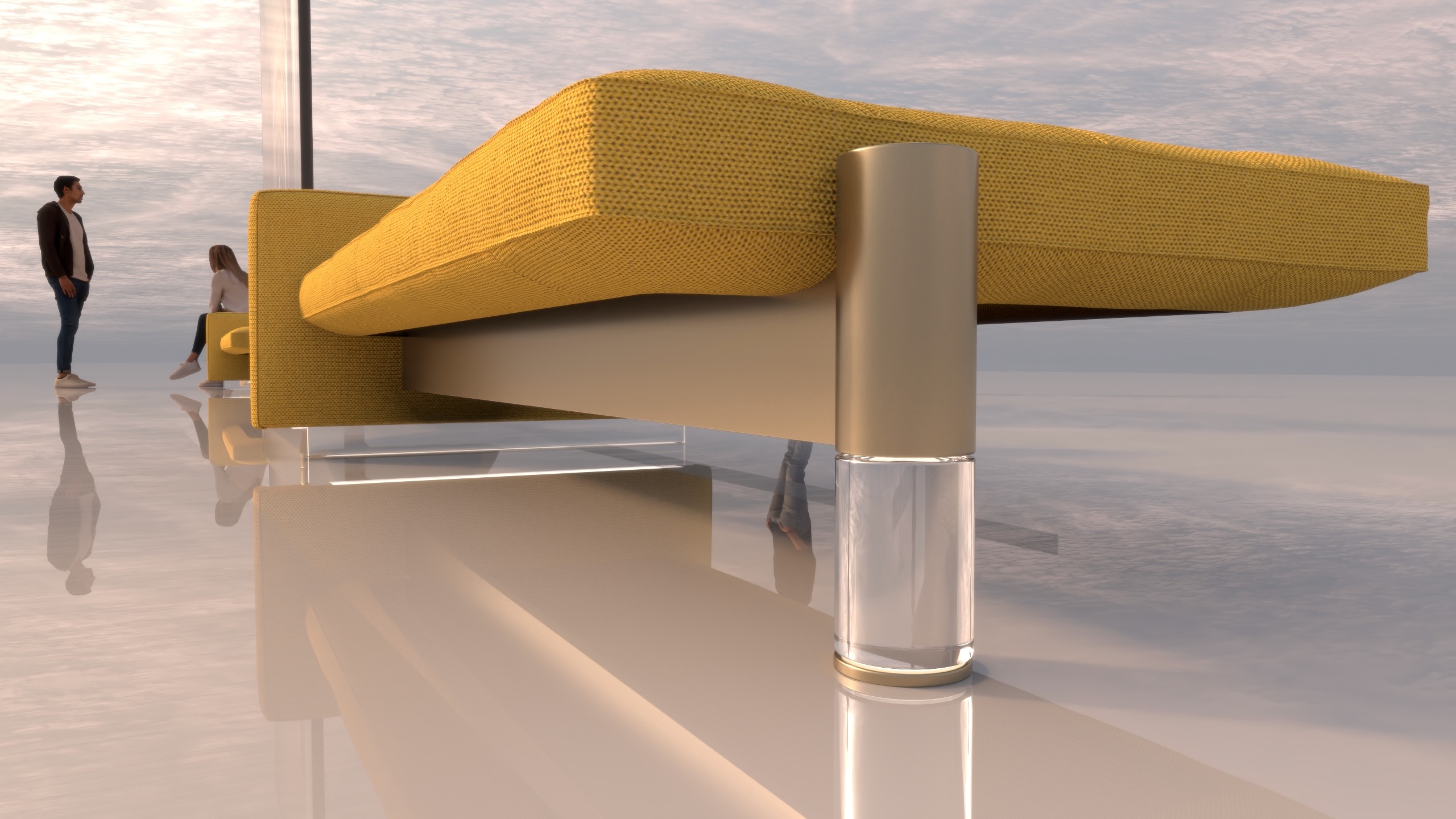
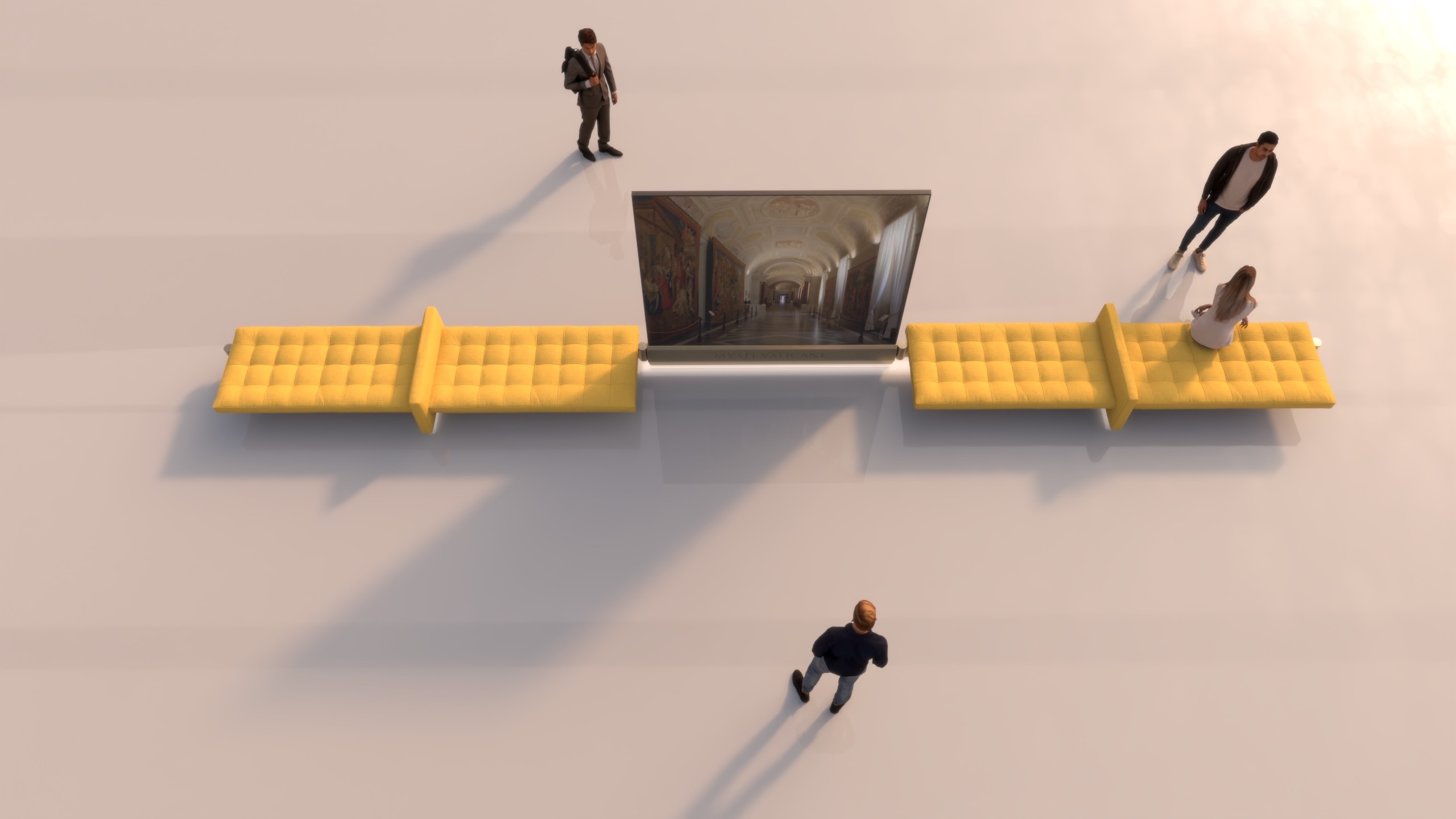
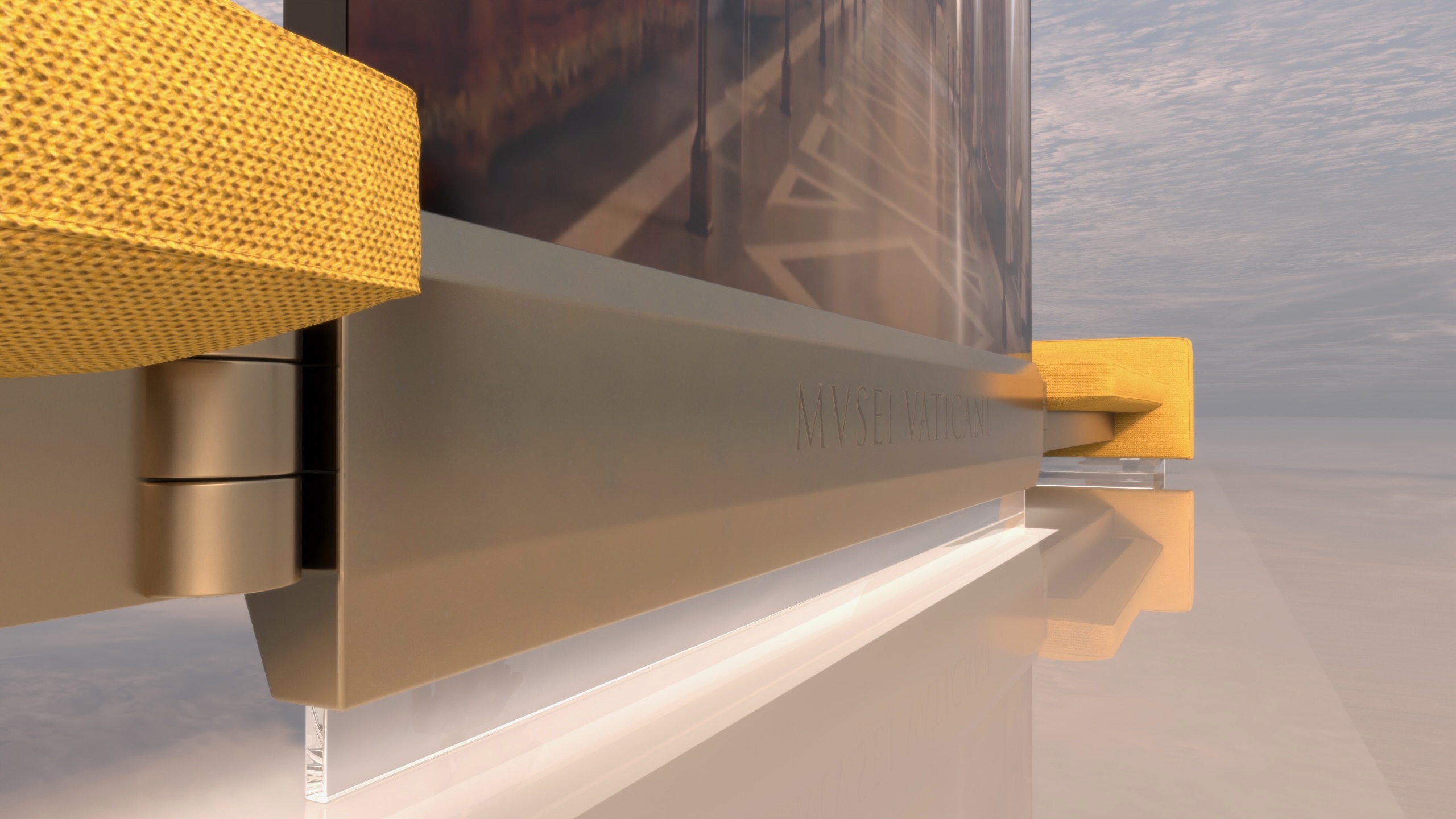
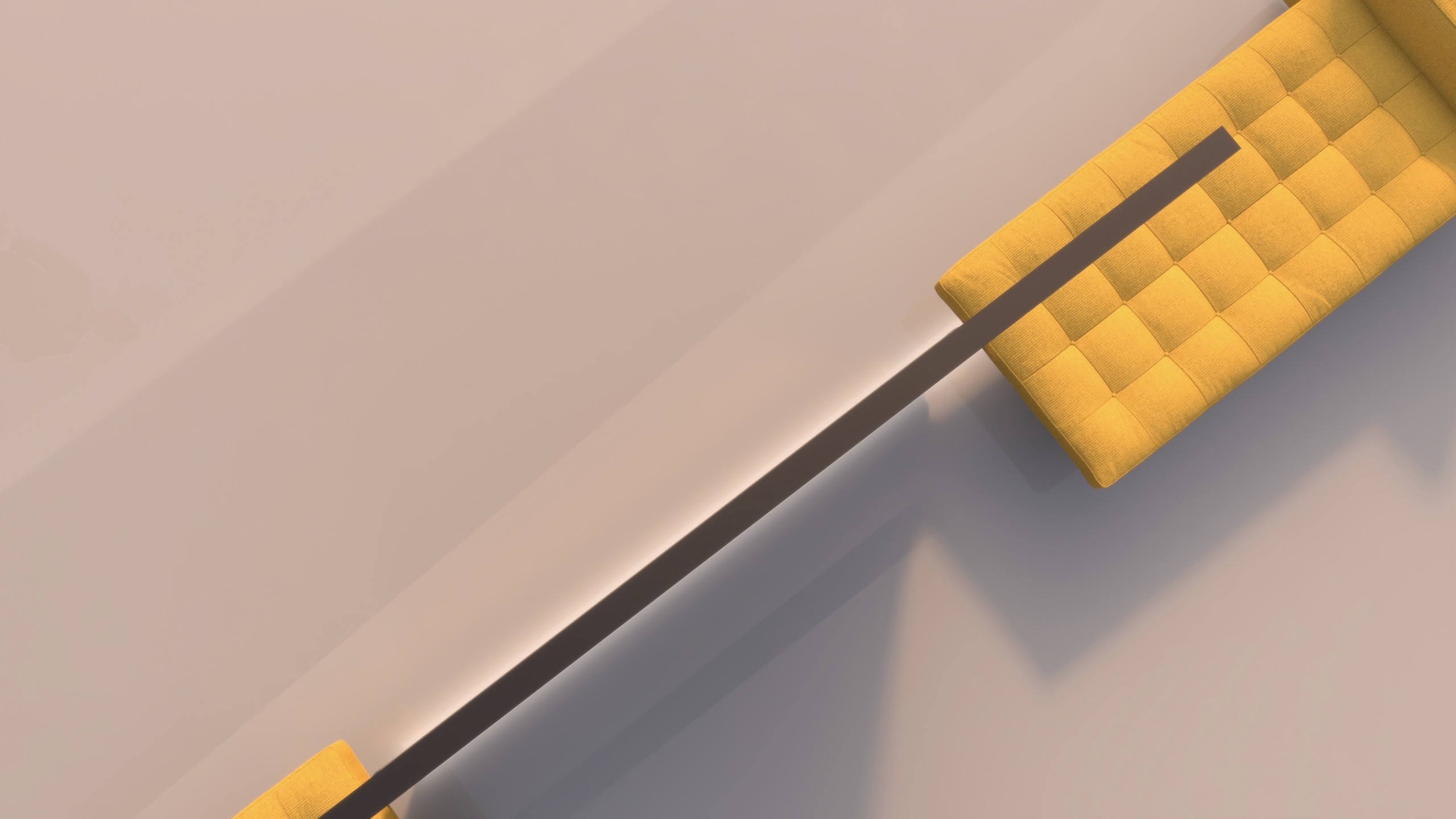
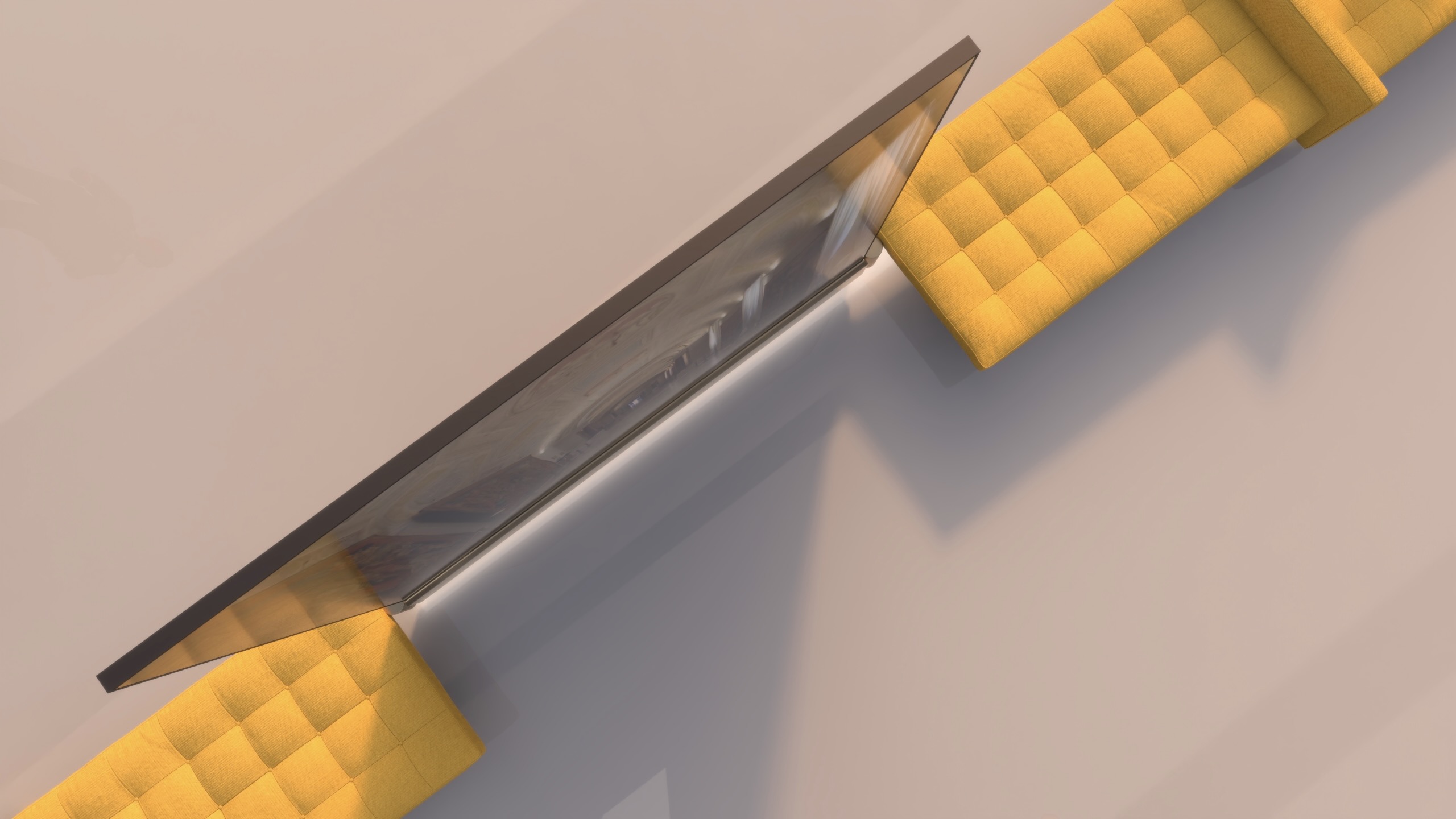
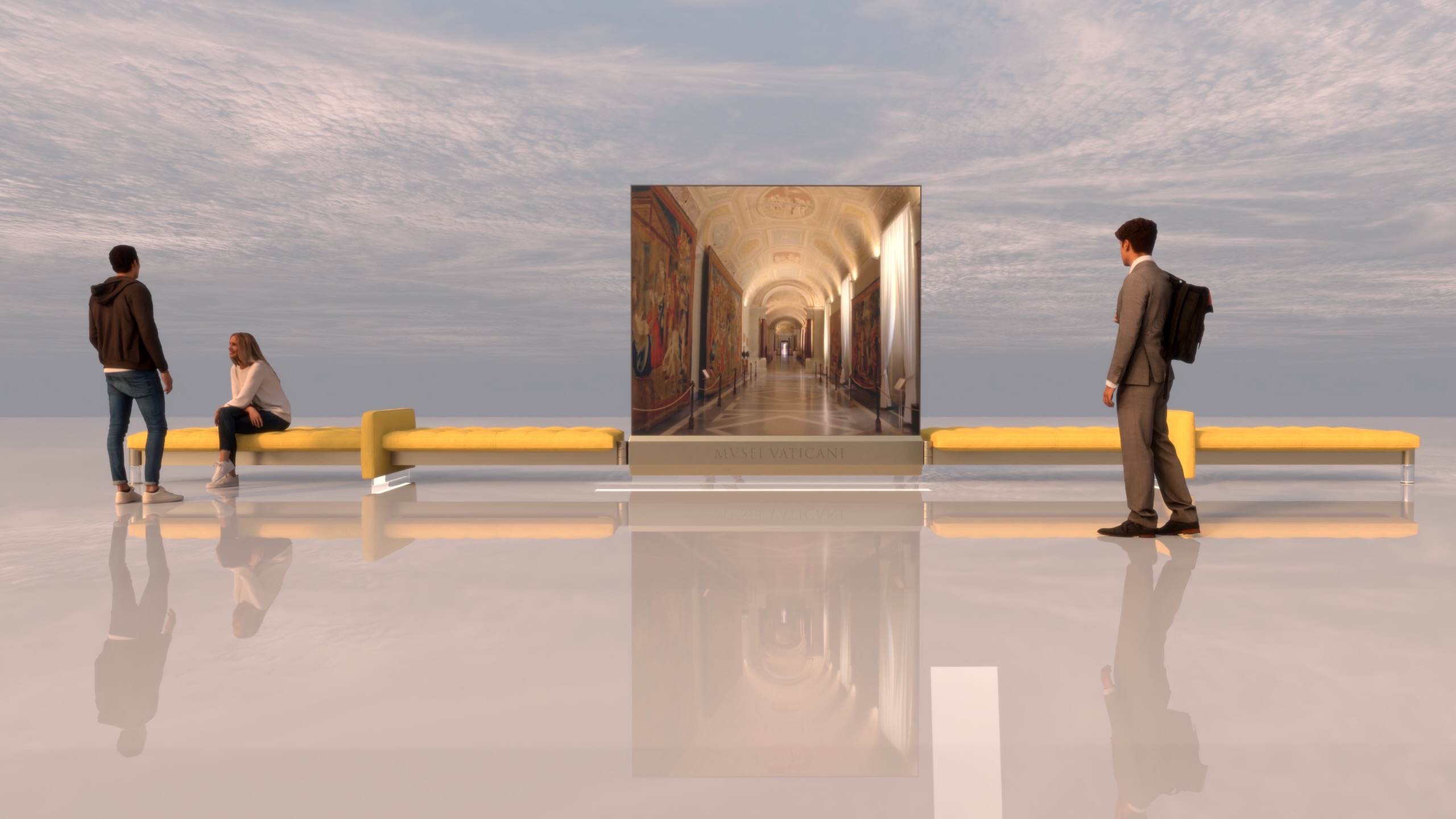
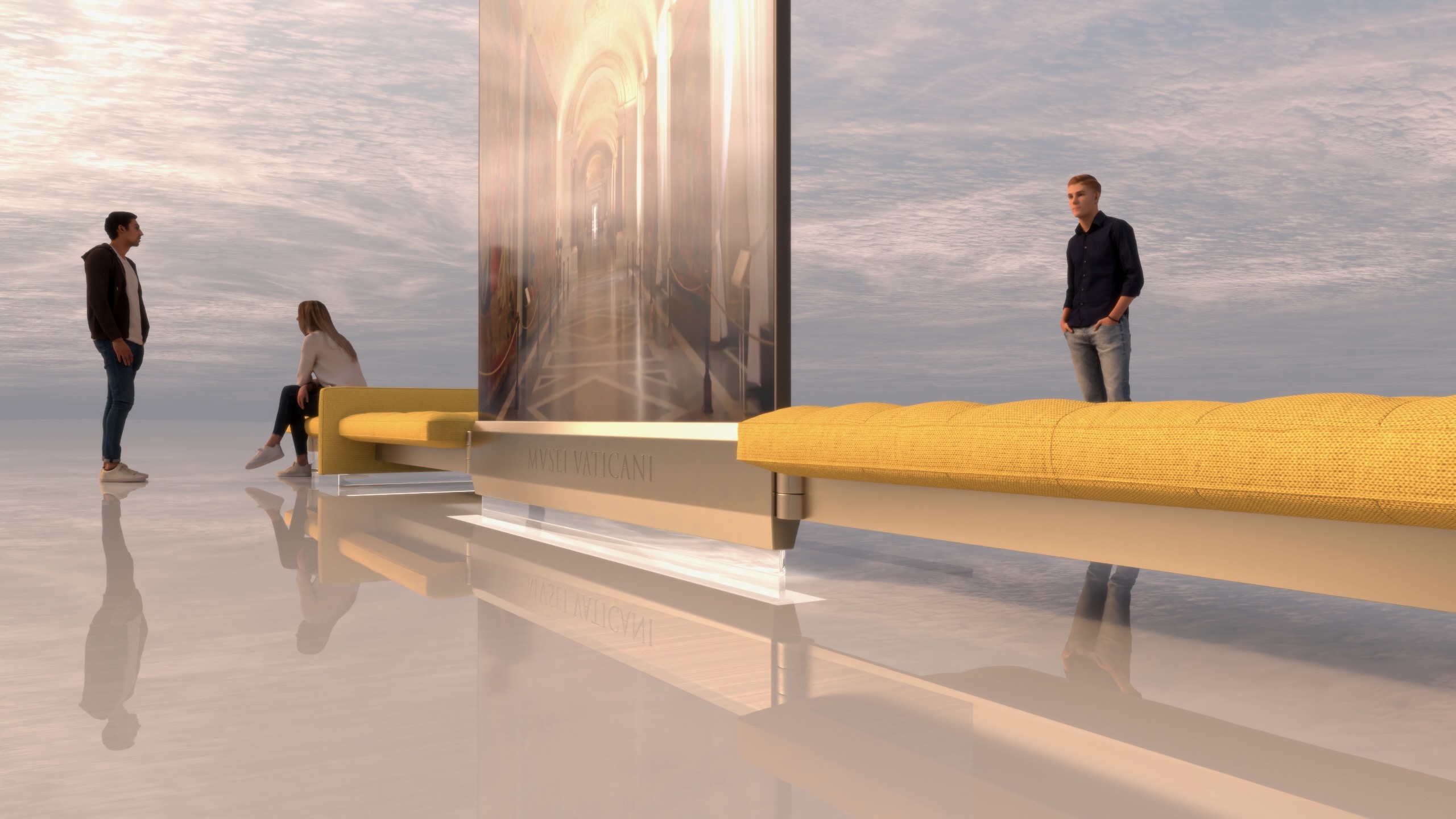
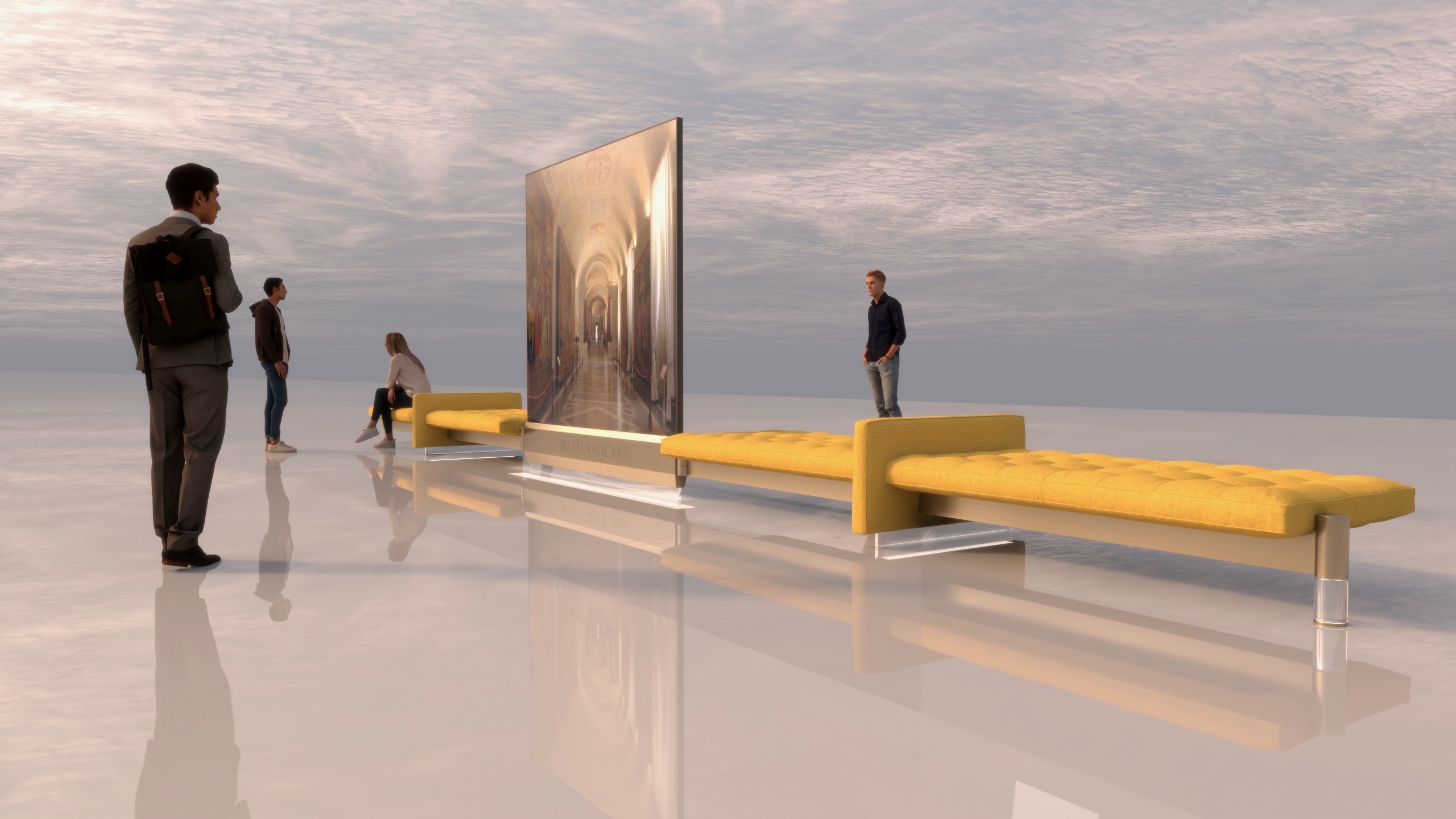
At the core of the project is the joint—a discreet yet essential element that enables the construction of a modular structure composed of alternating seating and informational surfaces. There is no fixed object, but an open system capable of adapting to spatial conditions and visitor flows.
Modularity is not only technical, but also spatial and behavioral.
The system can extend, contract, and reconfigure itself, creating moments of pause and density while subtly guiding movement without imposing it.
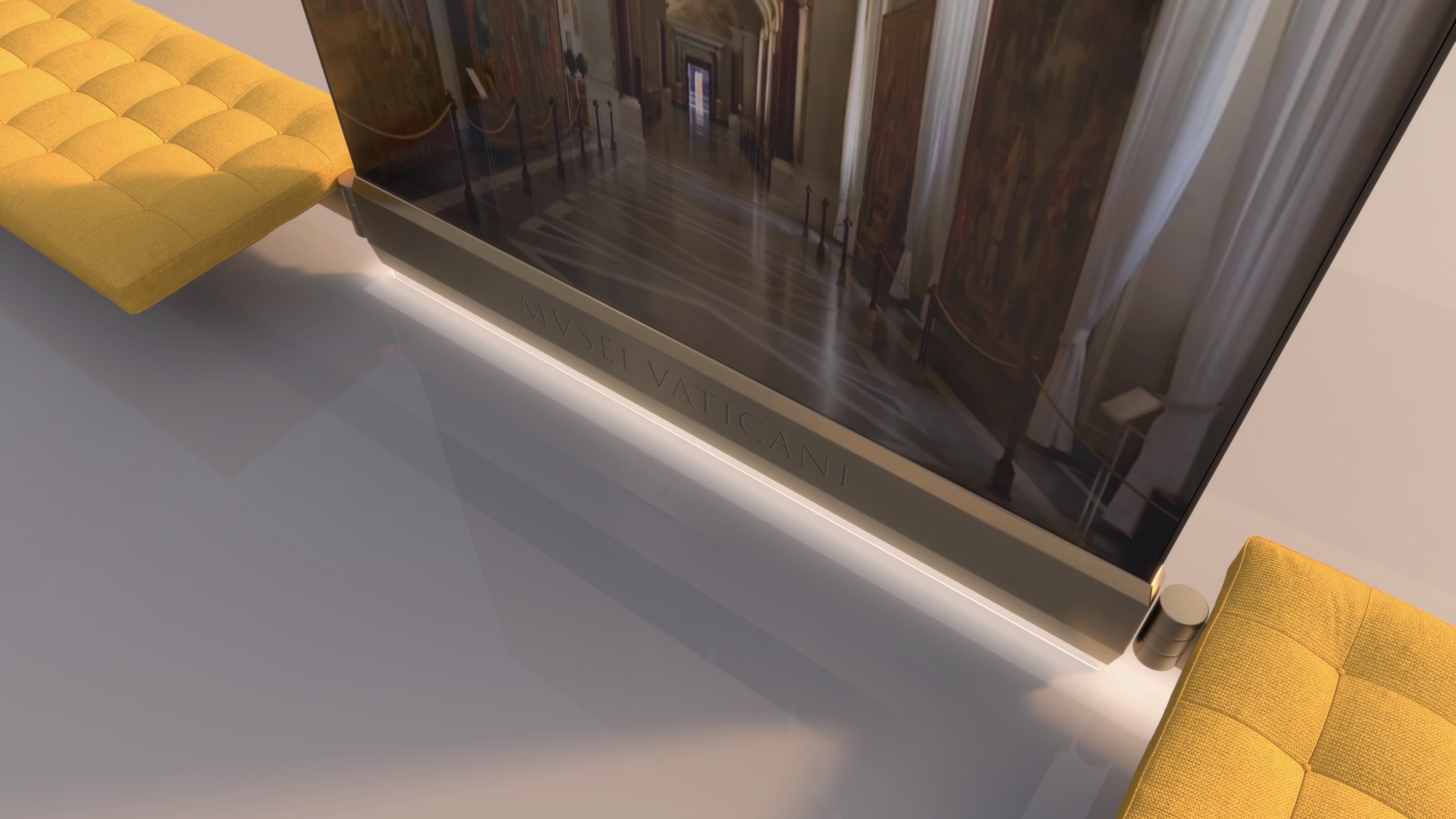
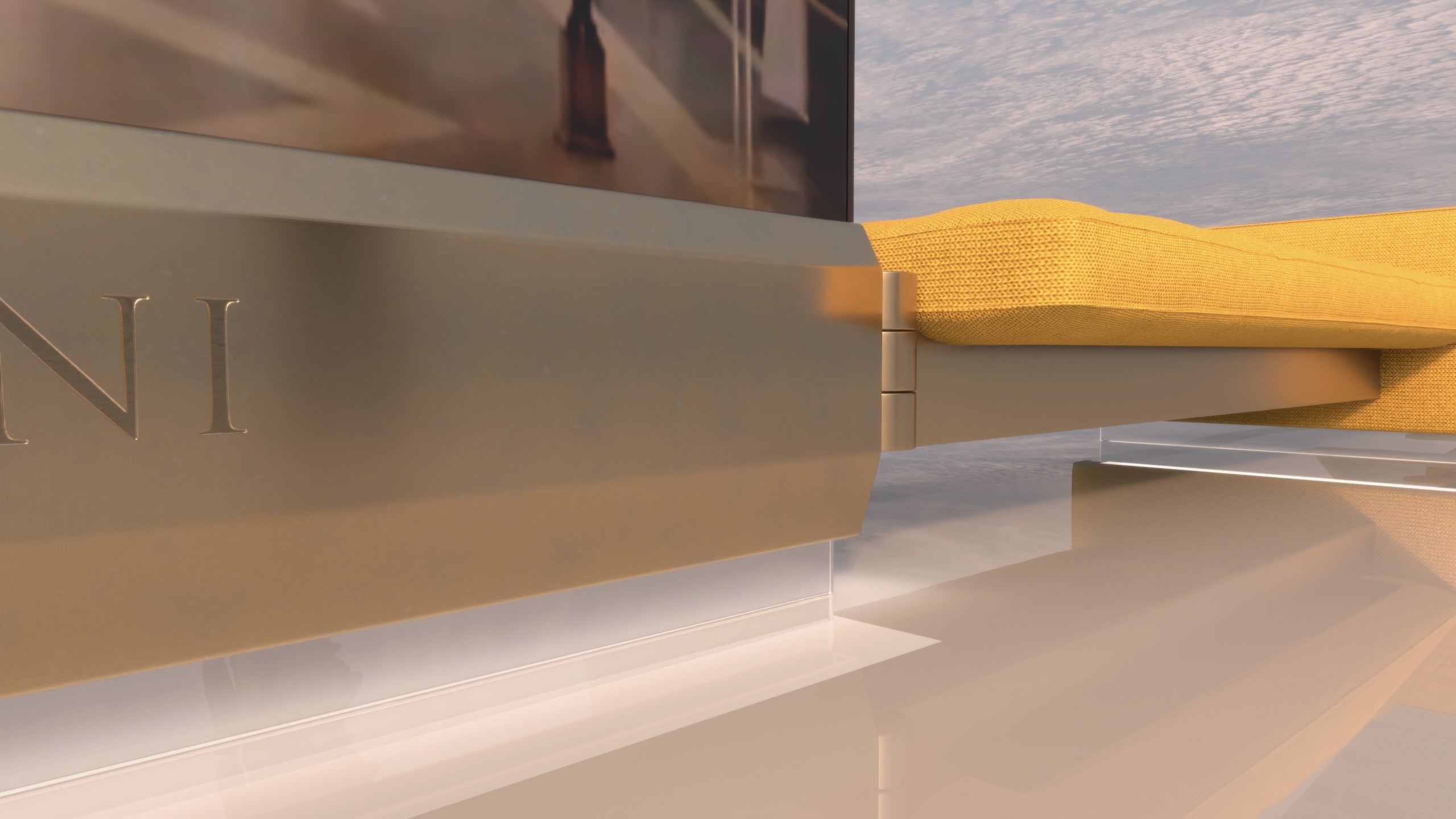
The identity of the project is expressed through the joint.
Clearly mechanical and structurally necessary, it is intentionally refined through a gold finish, introducing a dual reading: technical precision on one side, and a warmer, more institutional presence on the other, in dialogue with the museum context.
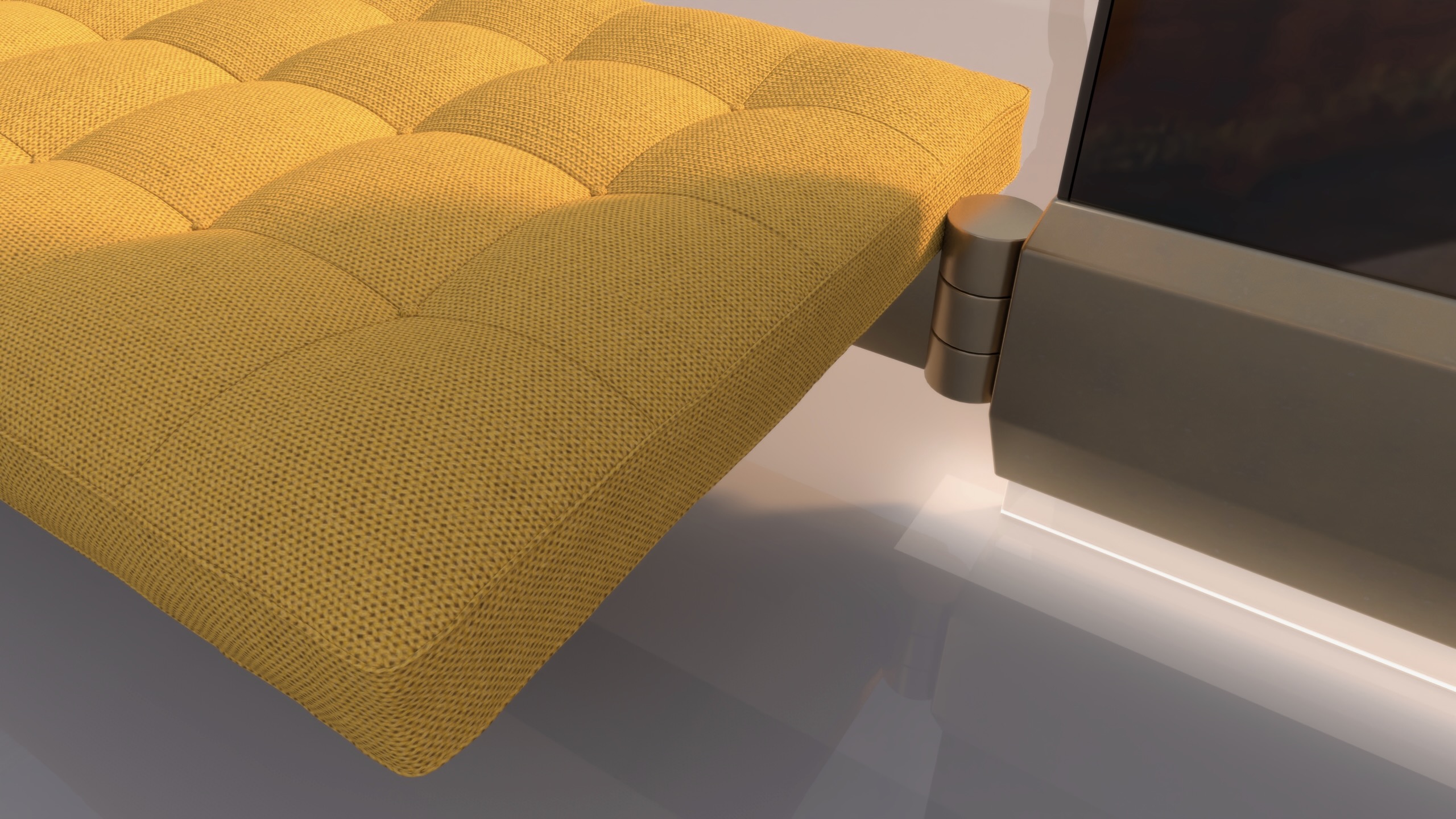
The joint makes transformation visible. It does not conceal modularity, but reveals it—making it legible and almost inviting. In contrast and balance, the seating elements appear as soft yet compact surfaces, linear and continuous.
They support the body without emphasizing it, maintaining a controlled and coherent presence within the overall system.
The alignment of seating and informational surfaces makes the project’s intent explicit: to merge rest with learning. Sitting becomes an act of reading; pausing becomes a condition for understanding. The system naturally encourages reflection, introducing a quality that is often missing in exhibition spaces—the time for deeper engagement.
The seating is conceived as a continuous, welcoming plane with a warm and recognizable materiality. The textile covering introduces a quiet, almost domestic dimension that gently contrasts with the solemnity of the museum without conflicting with it. Informational surfaces emerge with restraint, integrated into the sequence of elements as subtle variations in rhythm. The balance between solids and voids creates a light visual composition.
SOULMATE is not simply a bench, nor just an informational support.
It is a discreet infrastructure that organizes both the time and space of the visit.
It allows visitors to pause without leaving the path, to observe without stepping away, and to read without interrupting the experience.
In this sense, the project introduces a quality often overlooked in exhibition design: the possibility of a conscious pause.
SOULMATE creates a continuity between body and knowledge, between movement and stillness—a system capable of accompanying the visitor not only through space, but through the duration of the museum experience itself.
Copyright 2026 Studio Casti SRL
Via San Pietro all’Orto, 10 | 20121 Milano | Pi.08723300961
info@studiocasti.com – Privacy policy