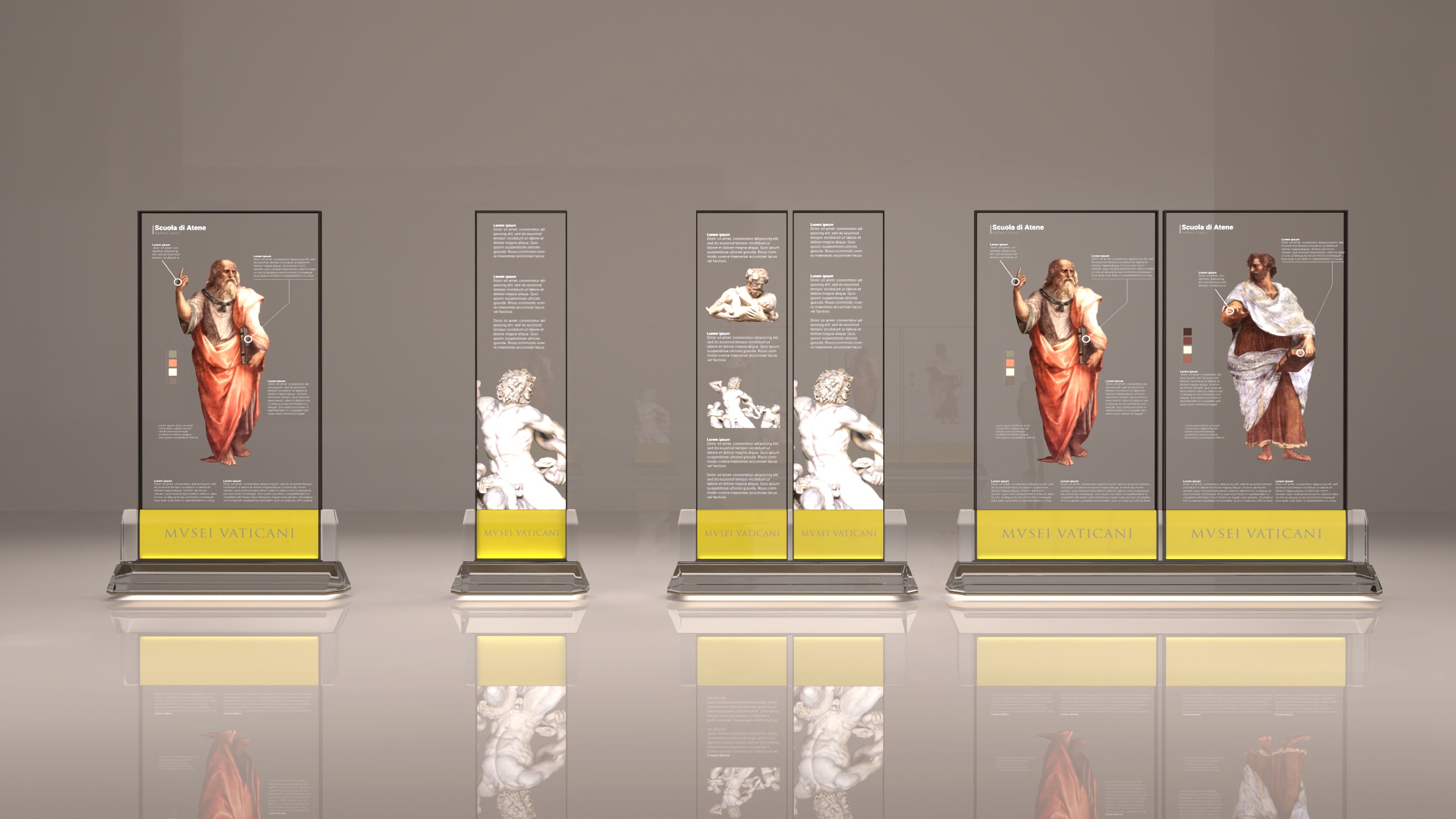
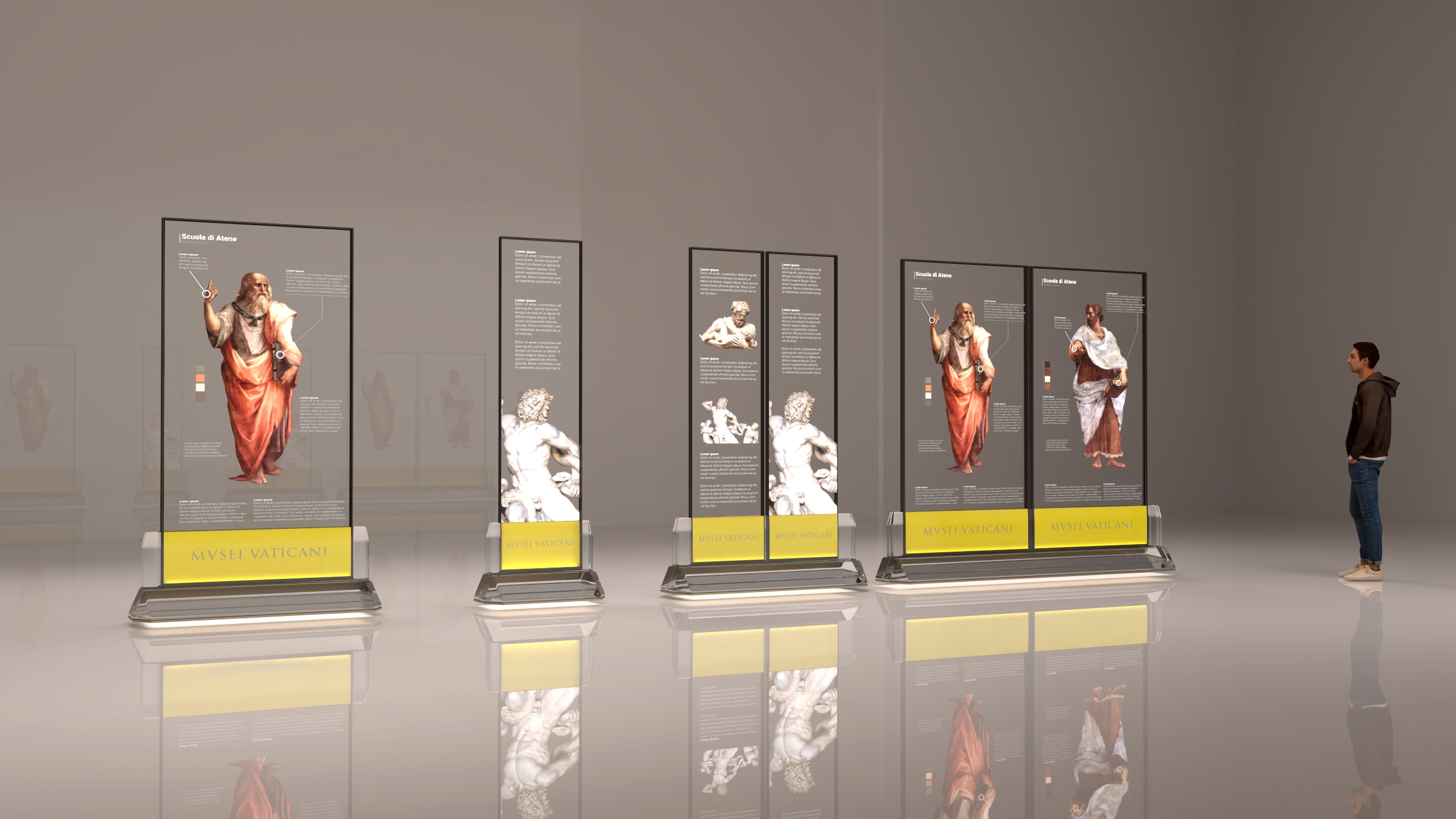
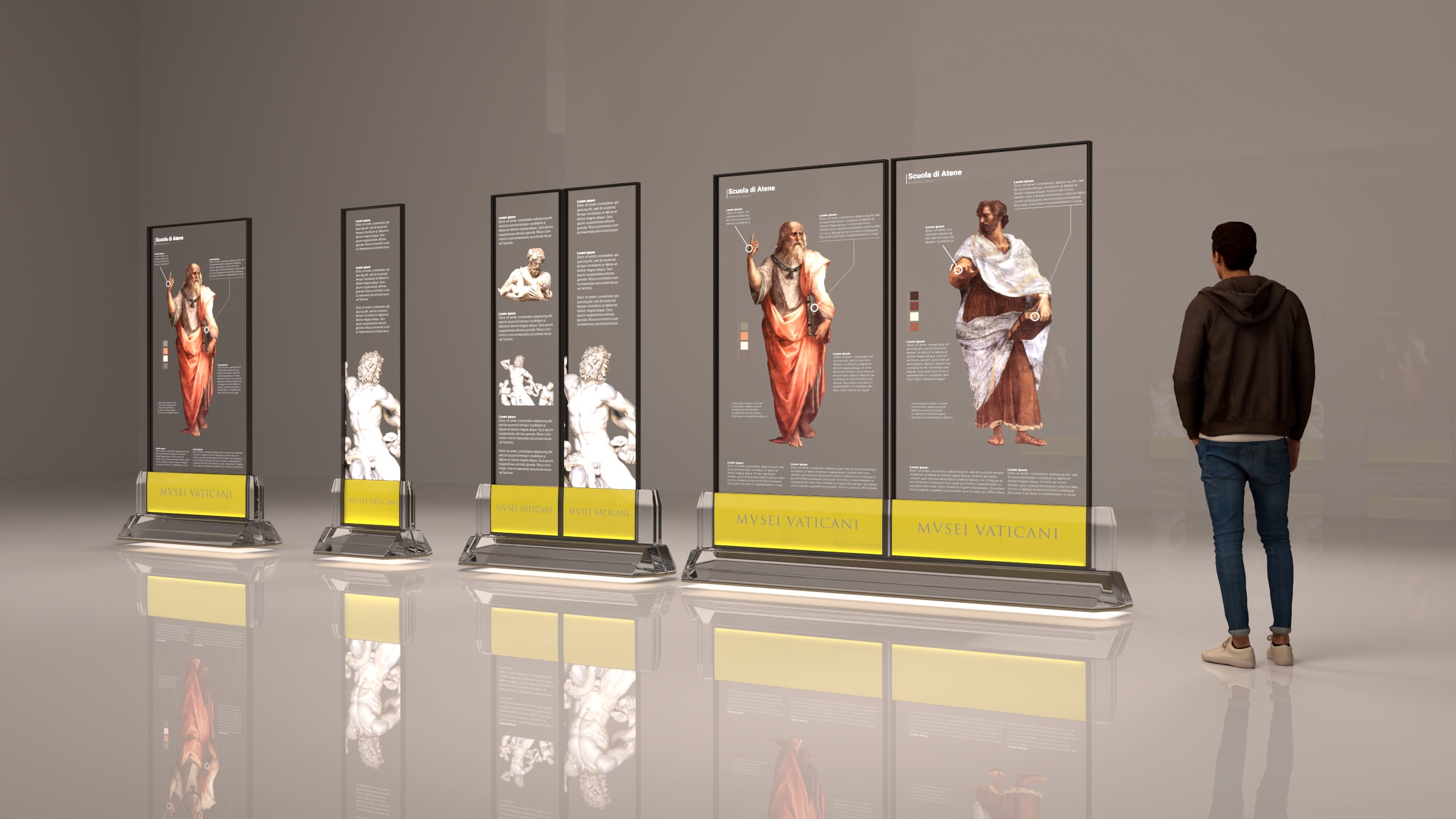
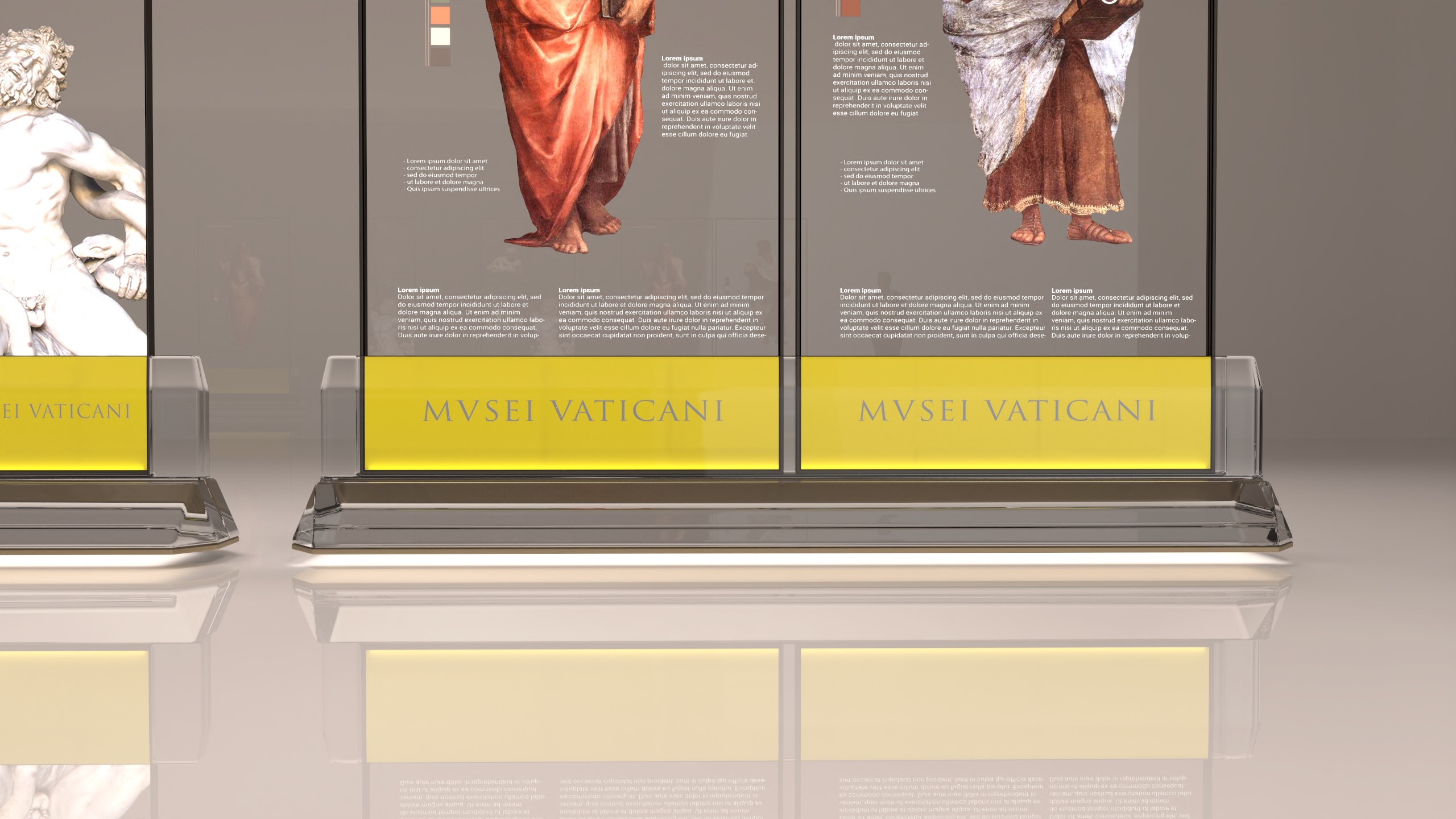
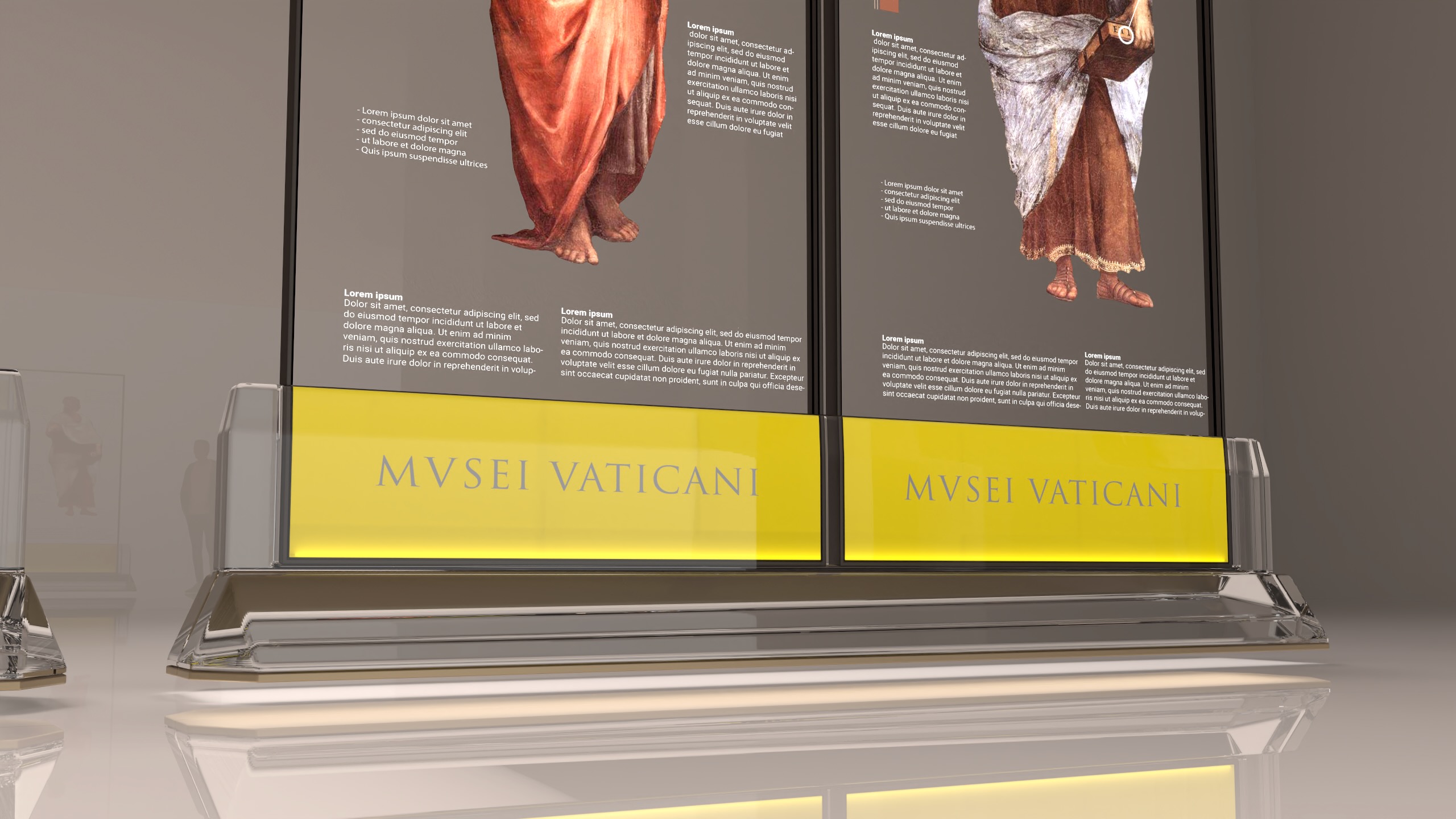
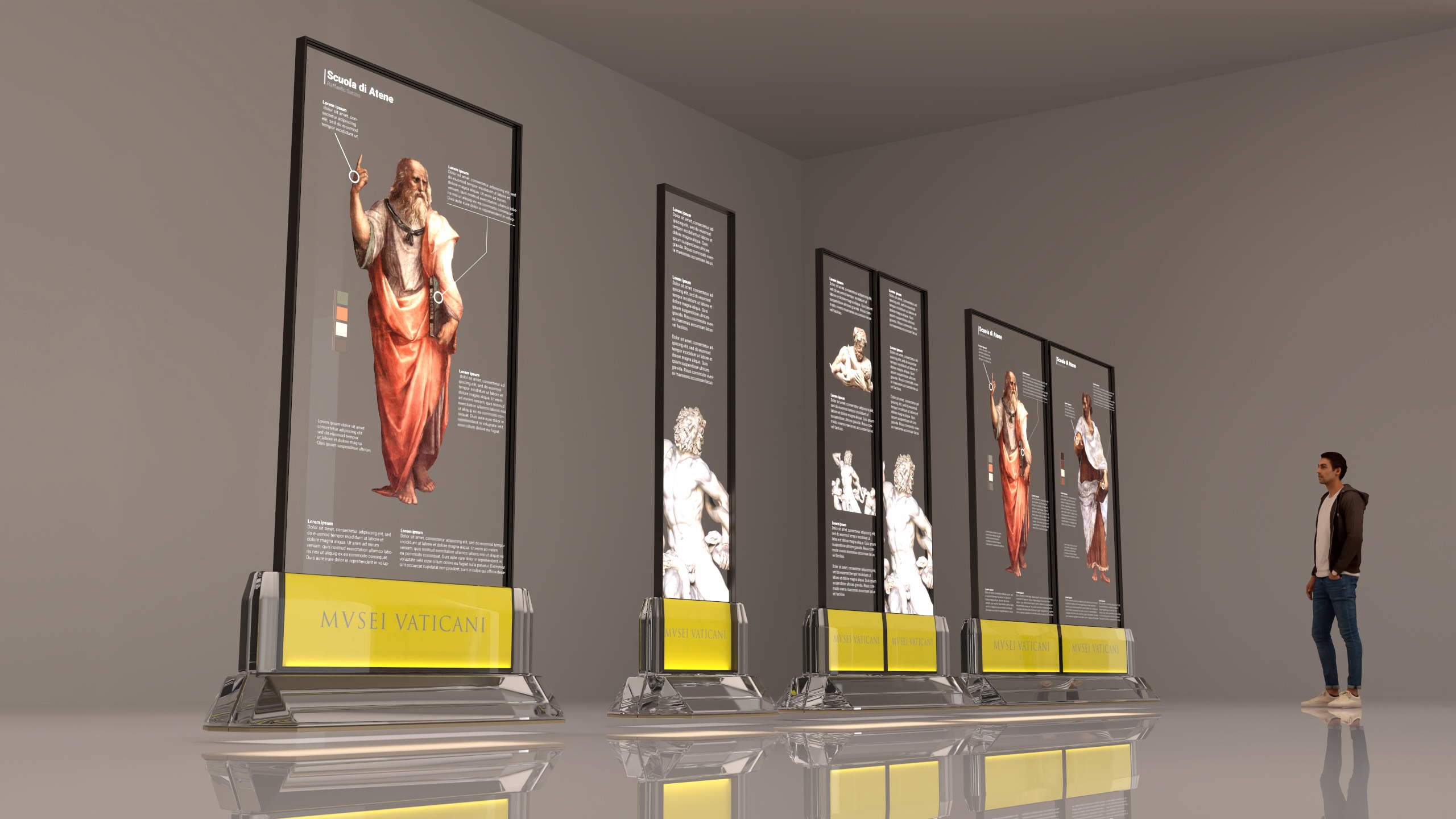
SOUL is a communication system designed to guide visitors through the Vatican Museums along a clear, progressive, and accessible path of interpretation. It does more than provide information—it establishes a relationship between visitor, space, and artwork, introducing rhythm and hierarchy into the viewing experience.
The project originates from a reflection on the physical presence of an object within a context already rich with meaning. For this reason, it explores a deliberately immaterial form: a device that occupies space without weighing it down, perceived more through subtraction than through presence.
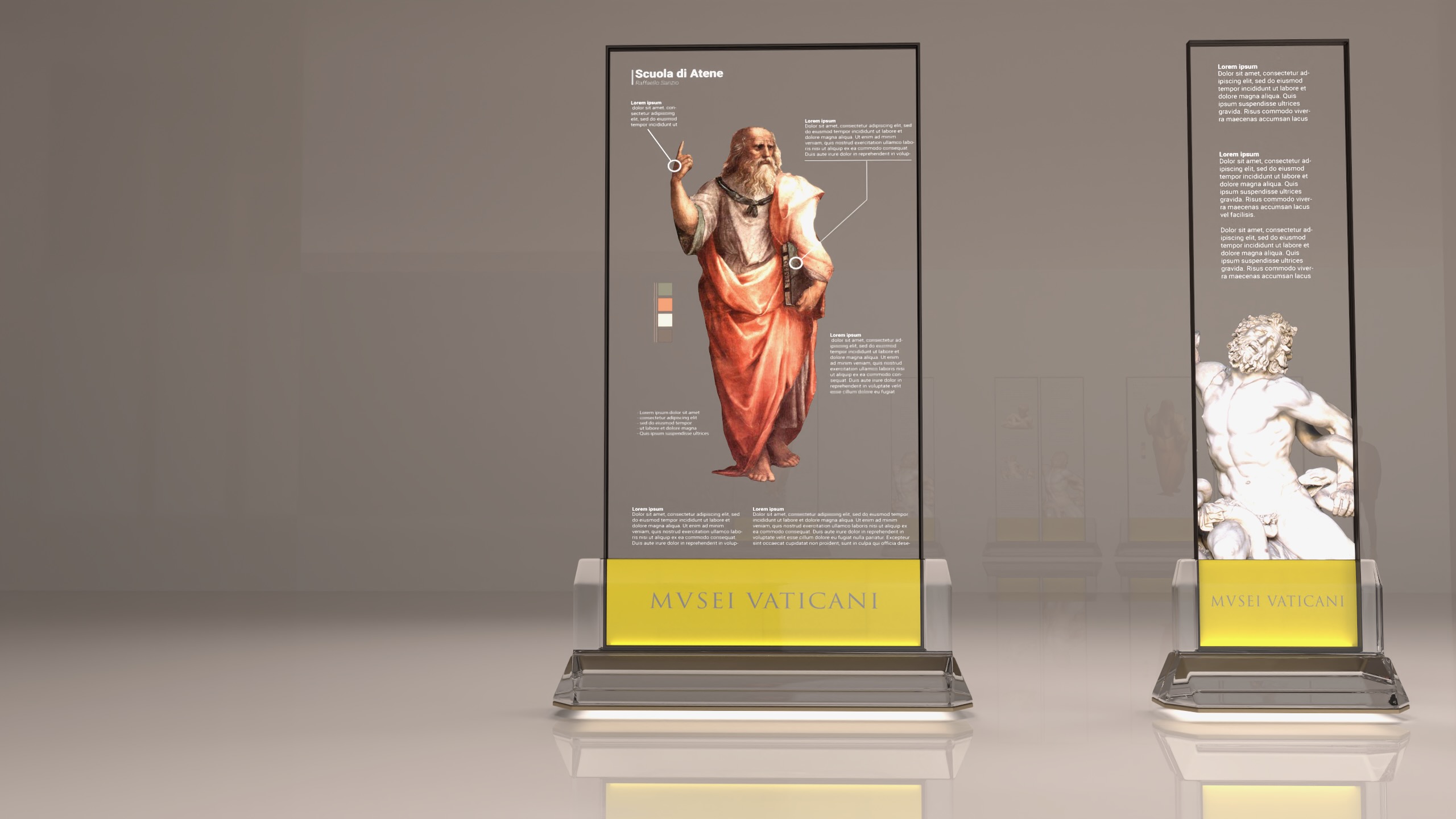
The form is driven by a simple principle: to minimize the perception of the support, allowing content and light to become the primary elements. Transparency is therefore treated not as an effect, but as a true design material.
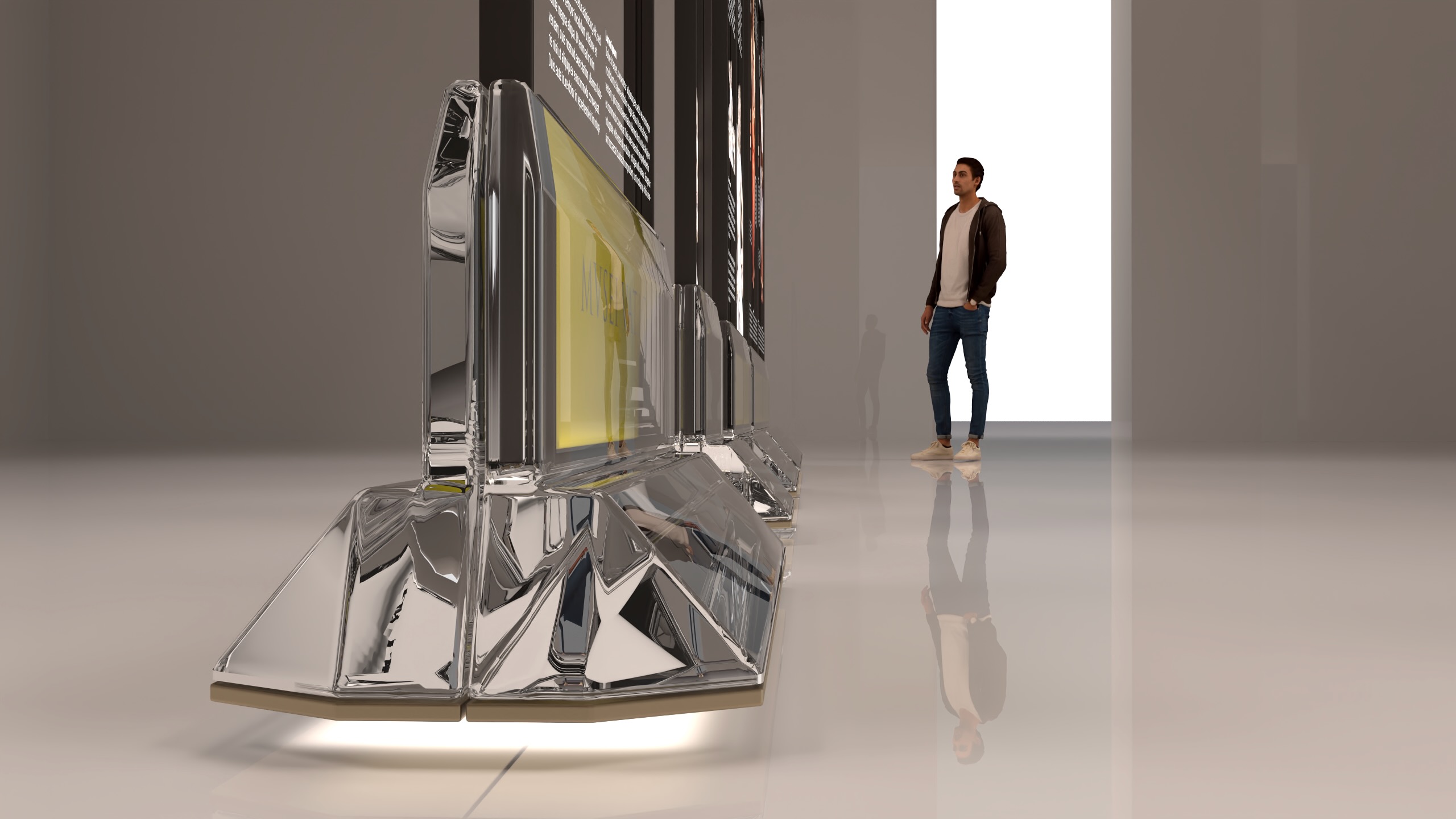
The system takes the shape of a vertical element that appears to hover slightly above the ground. This minimal yet decisive gap creates a sense of lightness and introduces an almost metaphysical condition: the object seems to resist gravity, as if it does not fully belong to the surface it stands on.
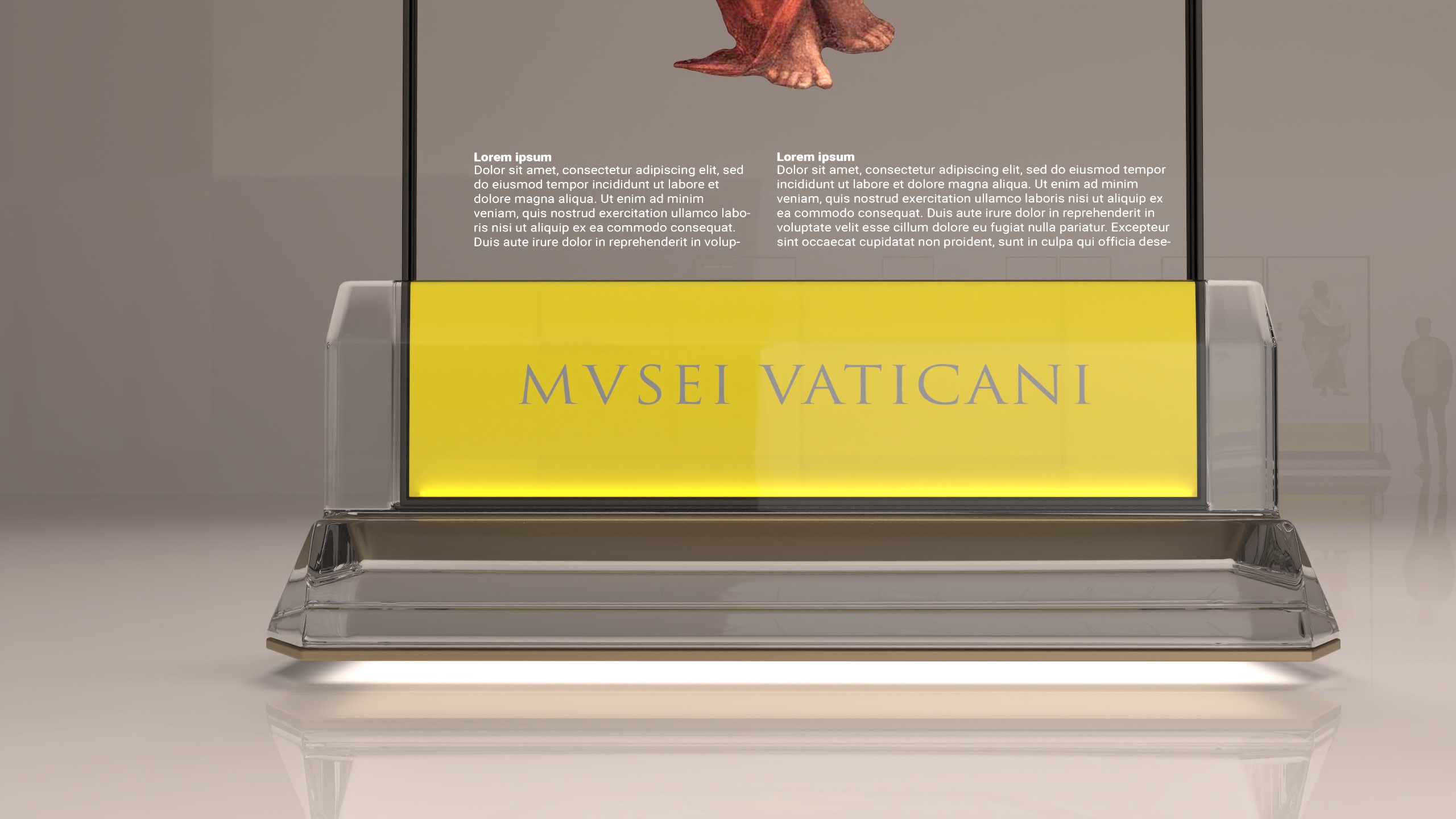
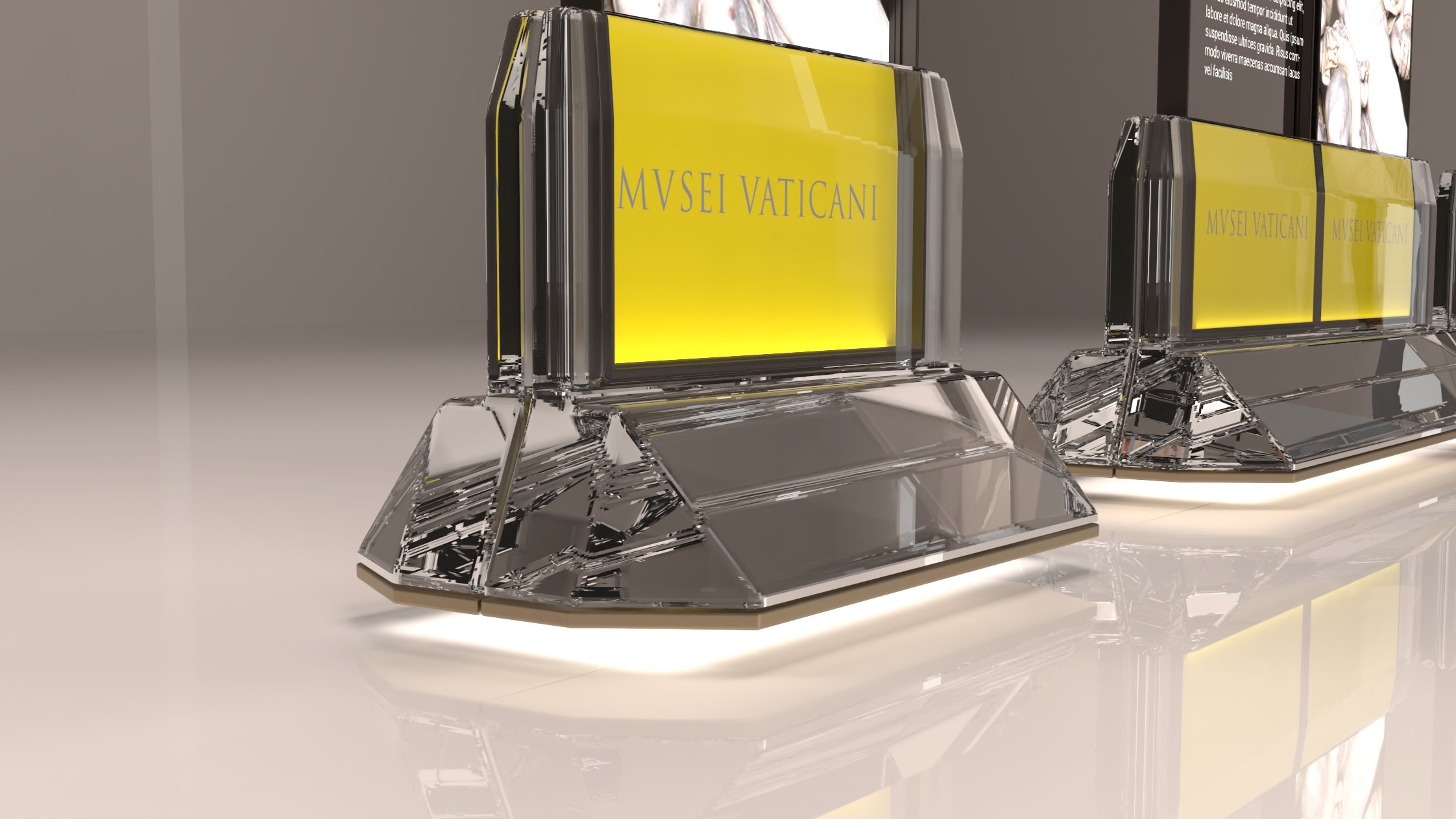
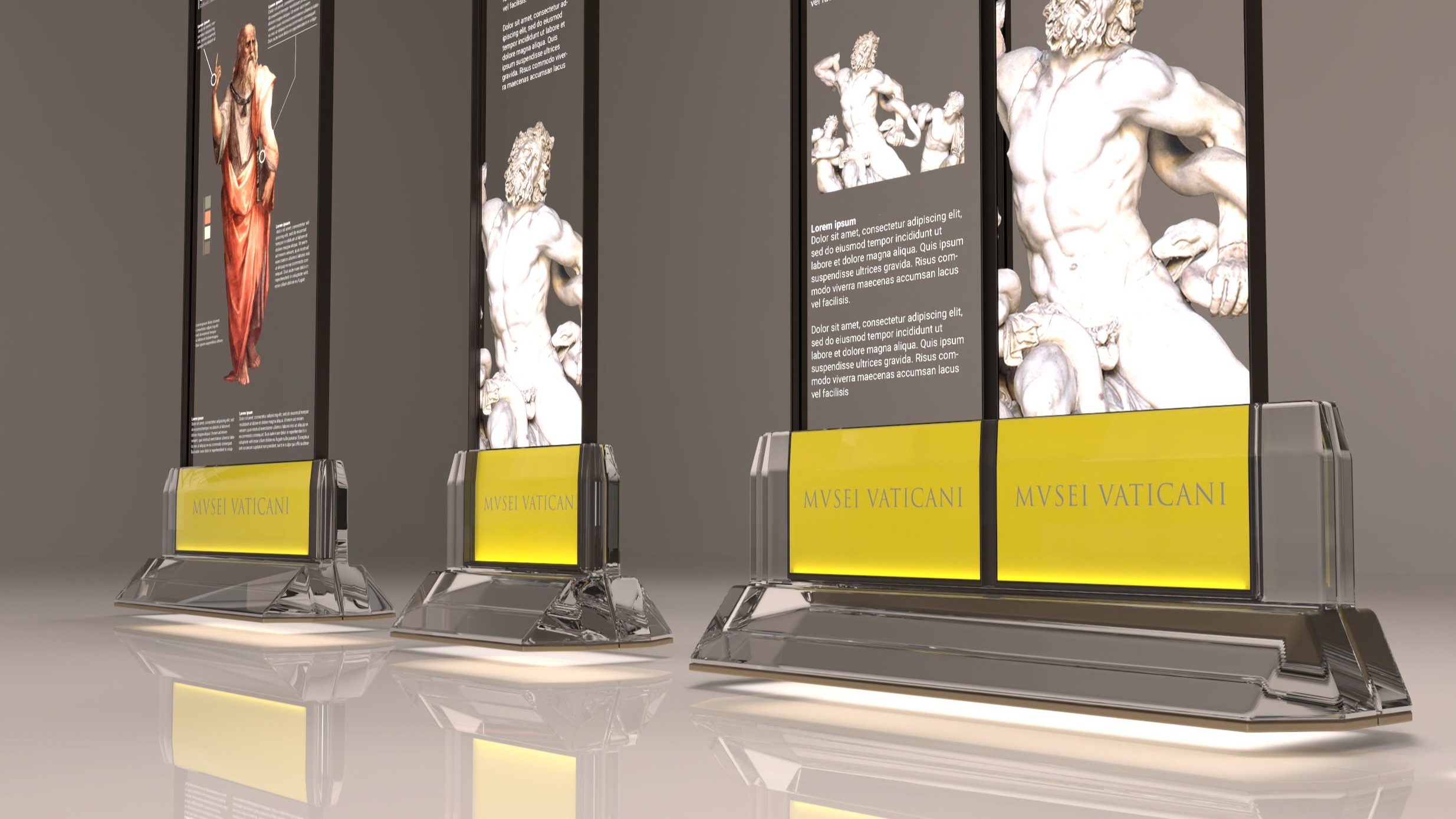
A wide, structurally stable base gradually dissolves into a transparent structure that houses the informational display, creating a visual continuity that guides the gaze upward. Within this transition, a gold band is introduced as both a visual anchor and an institutional marker, defining a symbolic point of contact with the ground and carrying the signature of the content. The result is a carefully balanced presence—an object that exists without imposing, that guides without interrupting.
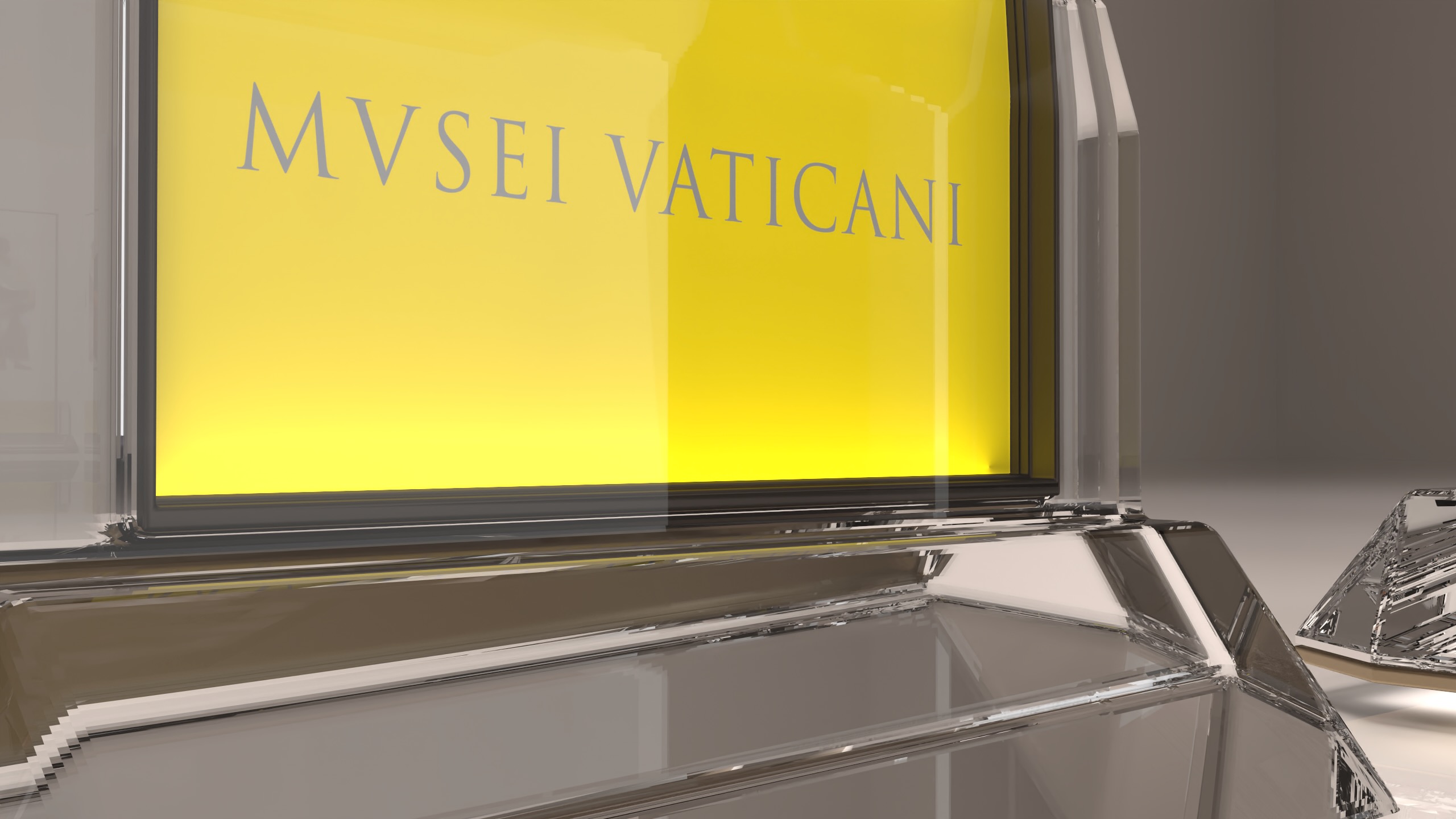
A defining feature of the project lies in the treatment of the transparent surface. Rather than neutral, it is faceted, composed of planes that capture and reflect light, giving the object a refined, almost gem-like quality. It is not merely a technical support, but a crafted presence that reflects the precision and intelligence of worked material.
Light does not simply pass through it—it is modulated, refracted, and returned, transforming the structure into an active element in constant dialogue with its surroundings. Even what tends to disappear retains a clear constructive identity, with its own discipline and measure.
Technology is integrated as a natural extension of this approach, avoiding any sense of spectacle. The system can be configured in different ways, depending on context and level of interaction: a TRANSPARENT OLED SCREEN, allowing digital content to overlay the physical world and layer information onto the artwork without replacing it; a double-sided OPAQUE OLED DISPLAY, offering stronger visual impact and effective readability in high-traffic areas; or a BACKLIT PRINTED SURFACE, a more essential and durable solution ensuring visual continuity and ease of maintenance.
In every case, technology remains secondary to the design—a discreet tool that enhances legibility without altering the experience.
SOUL ultimately proposes a different way of inhabiting the informational space of the museum: not as a collection of independent supports, but as a continuous, lightweight, almost silent system, capable of guiding the gaze and accompanying the visitor without interrupting the flow of the visit.
Copyright 2026 Studio Casti SRL
Via San Pietro all’Orto, 10 | 20121 Milano | Pi.08723300961
info@studiocasti.com – Privacy policy