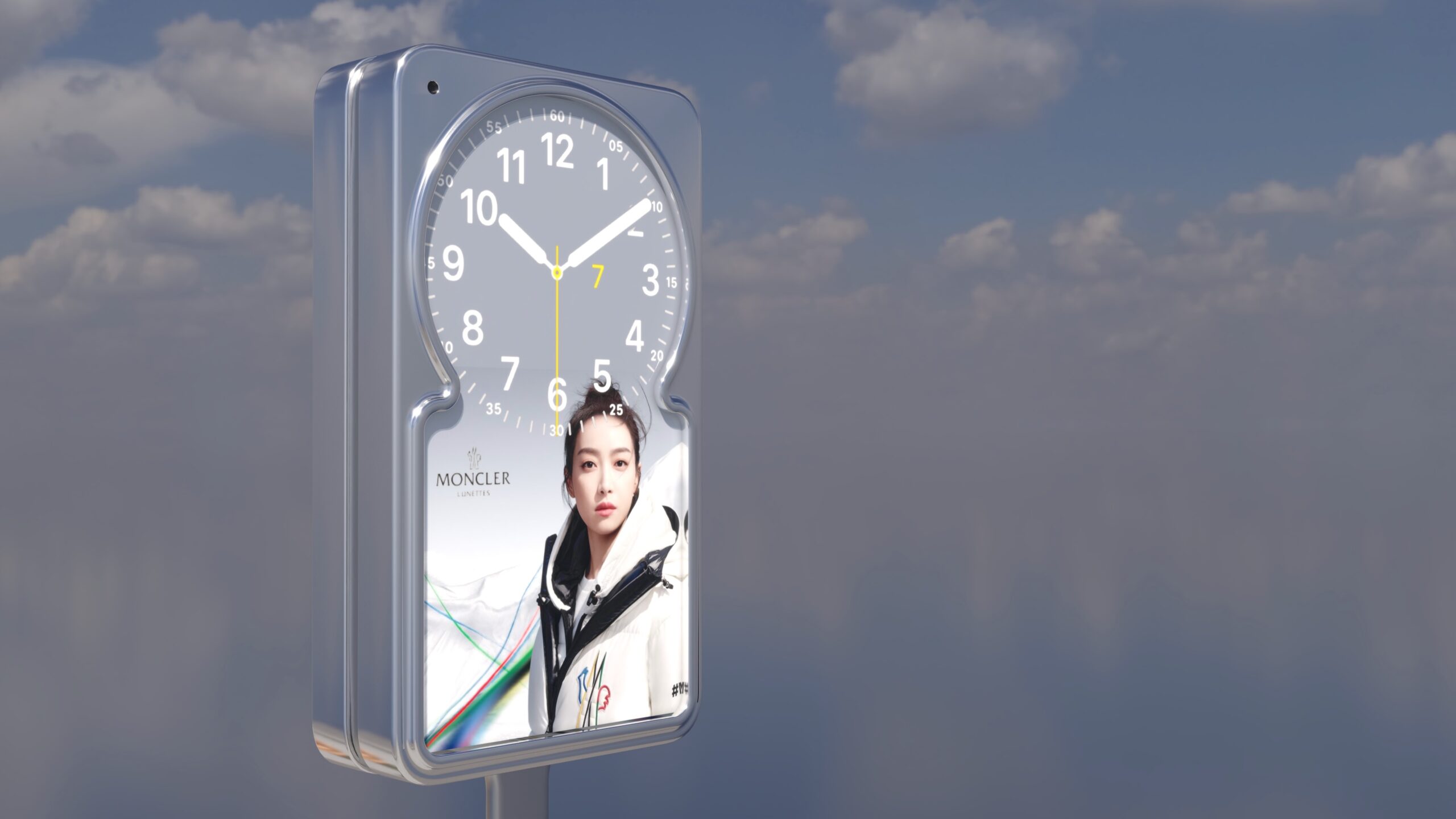
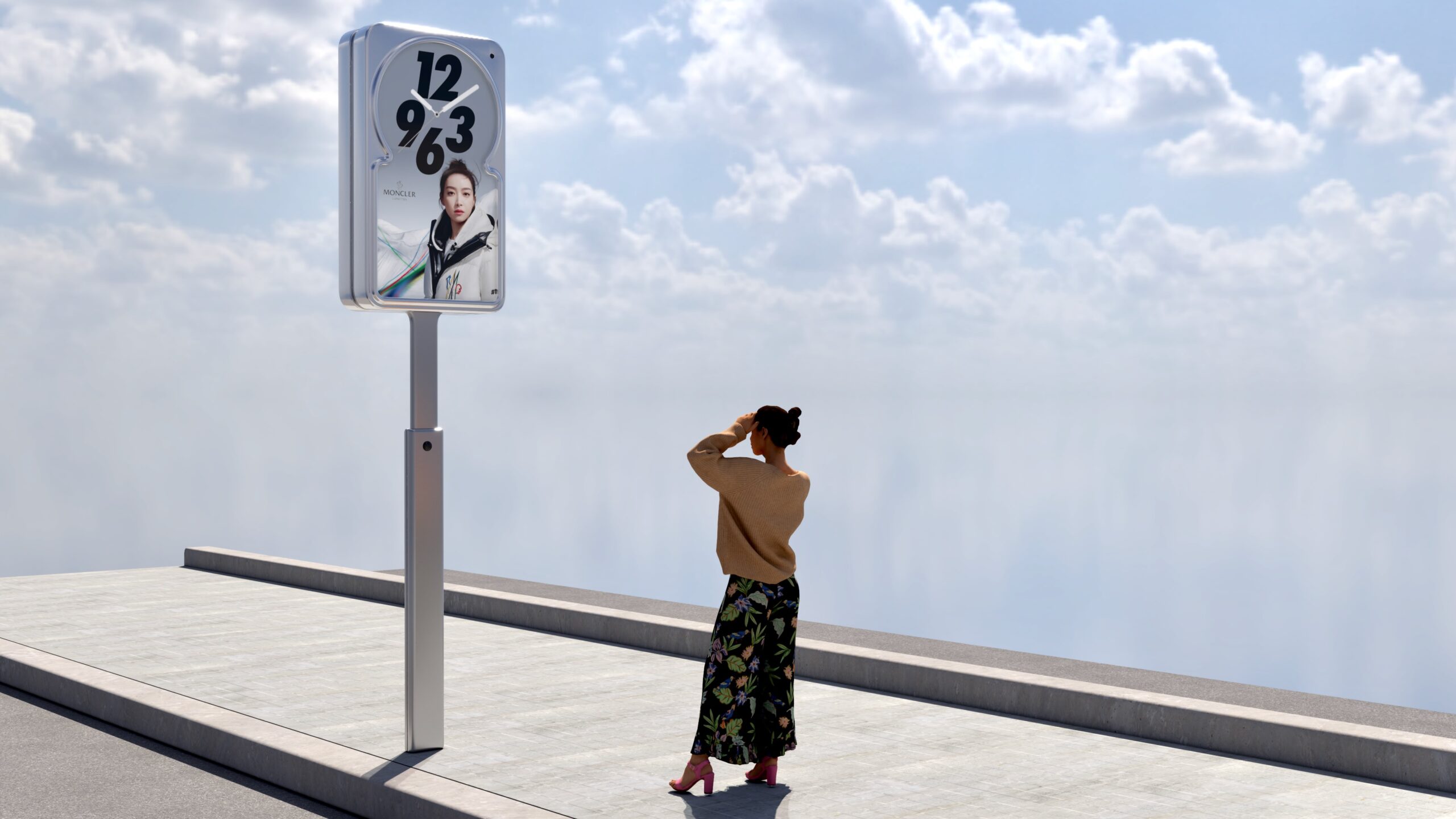





The digitalization of public clocks fits within the broader framework of European Smart City guidelines, proposing both a technological and cultural upgrade of a historic urban service.
The primary objective is accuracy—an essential condition for an infrastructure whose value is rooted in user trust. Digital synchronization eliminates time discrepancies, ensuring a reliable and continuous service. At the same time, the system introduces greater flexibility in content management, enabling the dynamic integration of public information and advertising. This approach allows for advanced scheduling, adaptable to different urban contexts and daily flows, while also reducing maintenance costs through remote monitoring systems capable of detecting and resolving issues in real time.
In central and high-traffic areas, replacing existing installations with digital devices enhances the perceived quality of public space and creates new opportunities for economic value generation.
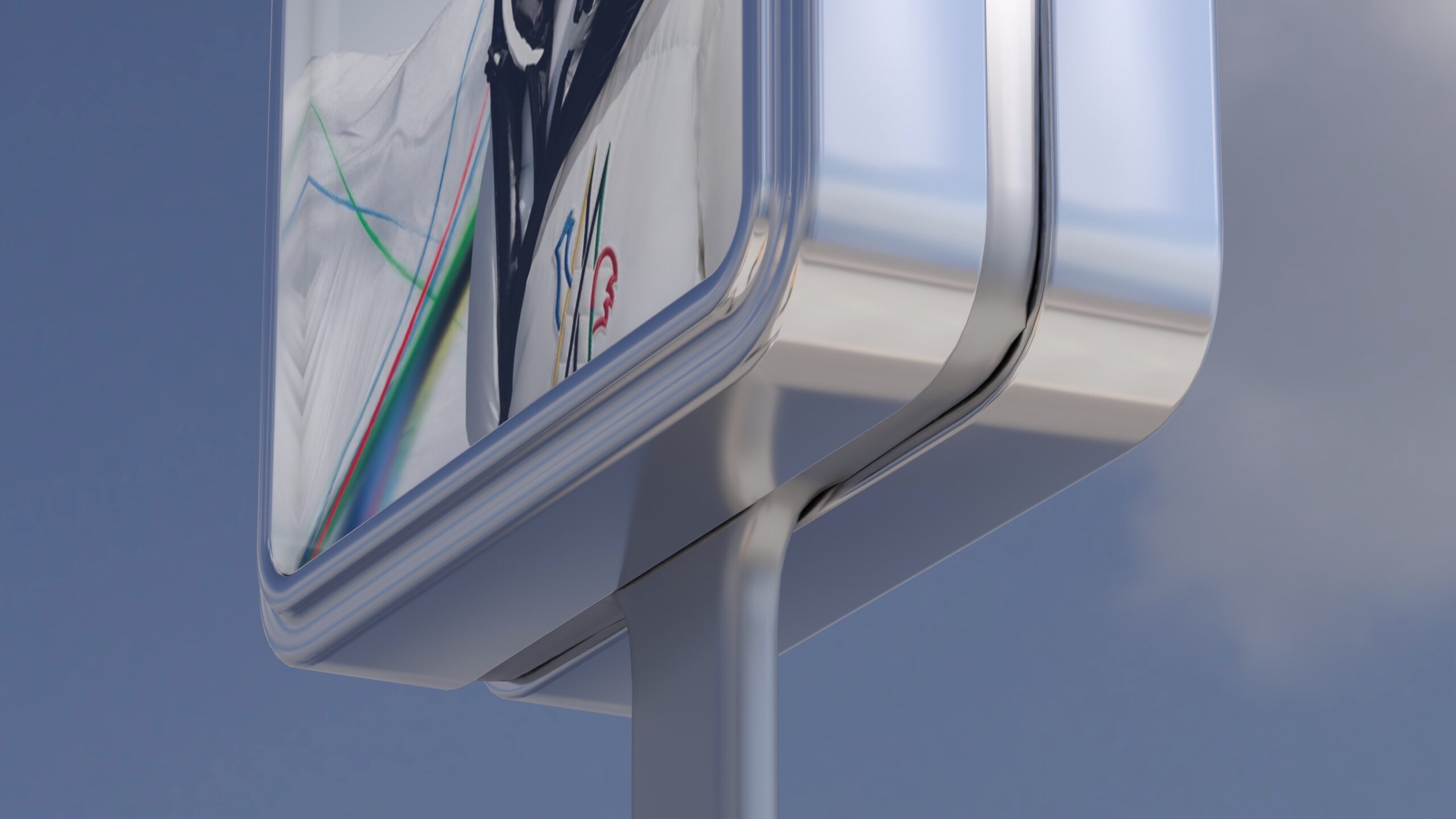
The development of a large-scale digital clock requires technologies that ensure resistance to weather conditions, readability under strong sunlight, and operational continuity. At the same time, the project represents a stylistic challenge, as its integration into the contemporary urban landscape calls for a language that is coherent with dynamic and evolving environments.
The proposed device consists of an LED-backlit LCD screen, supported by adaptable structures suitable for different contexts and protected by a customizable outer shell that combines durability with formal expression. The design maintains a dialogue with existing installations while introducing greater freedom in the relationship between time display and dynamic content.
The conceptual reference is that of smartwatches—customizable, updatable devices that, when translated into the urban scale, become flexible information systems capable of hosting institutional, informational, and commercial content. With a graphic interface that can evolve over time, the system enhances both the image of the service and its role within public space.
Copyright 2026 Studio Casti SRL
Via San Pietro all’Orto, 10 | 20121 Milano | Pi.08723300961
info@studiocasti.com – Privacy policy